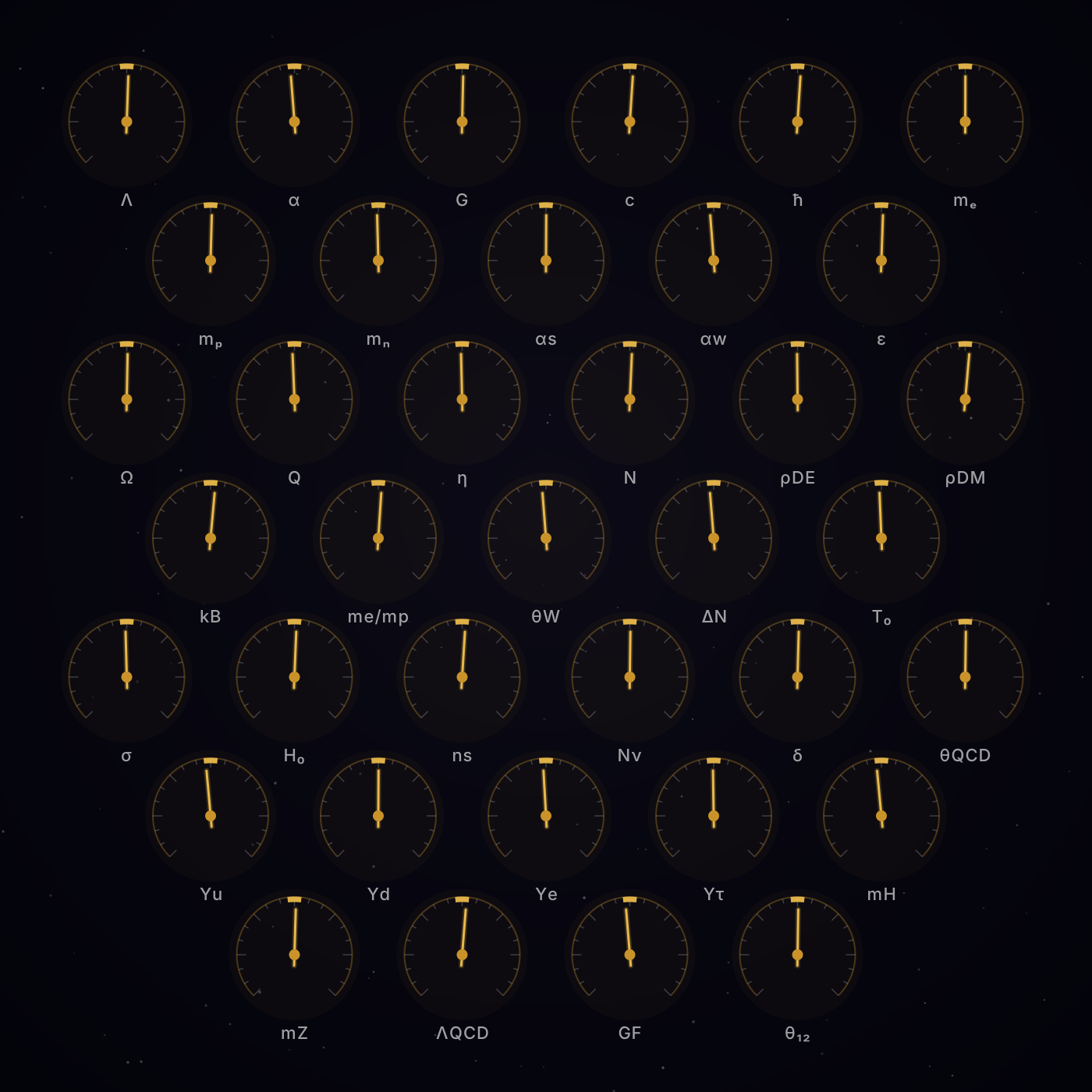
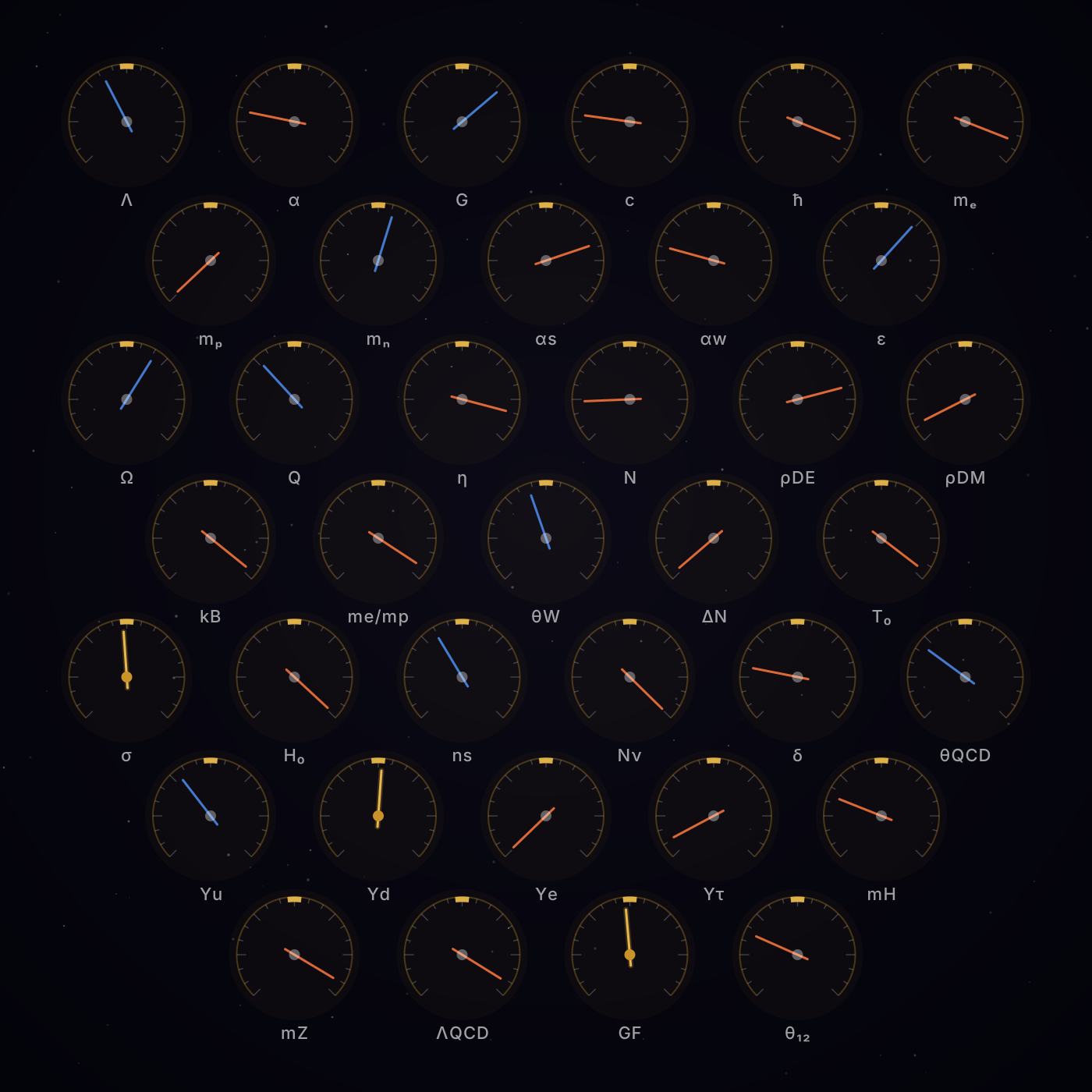
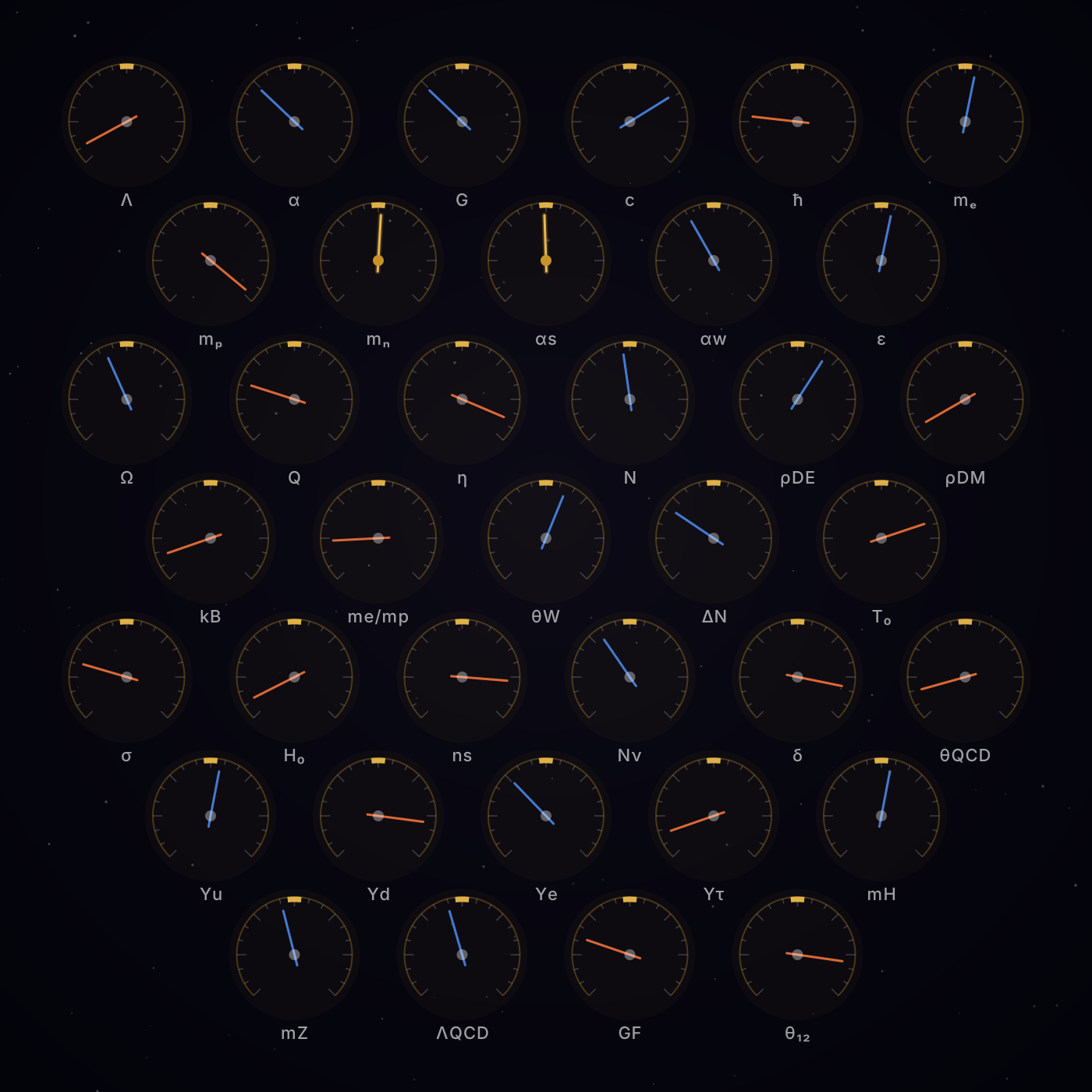
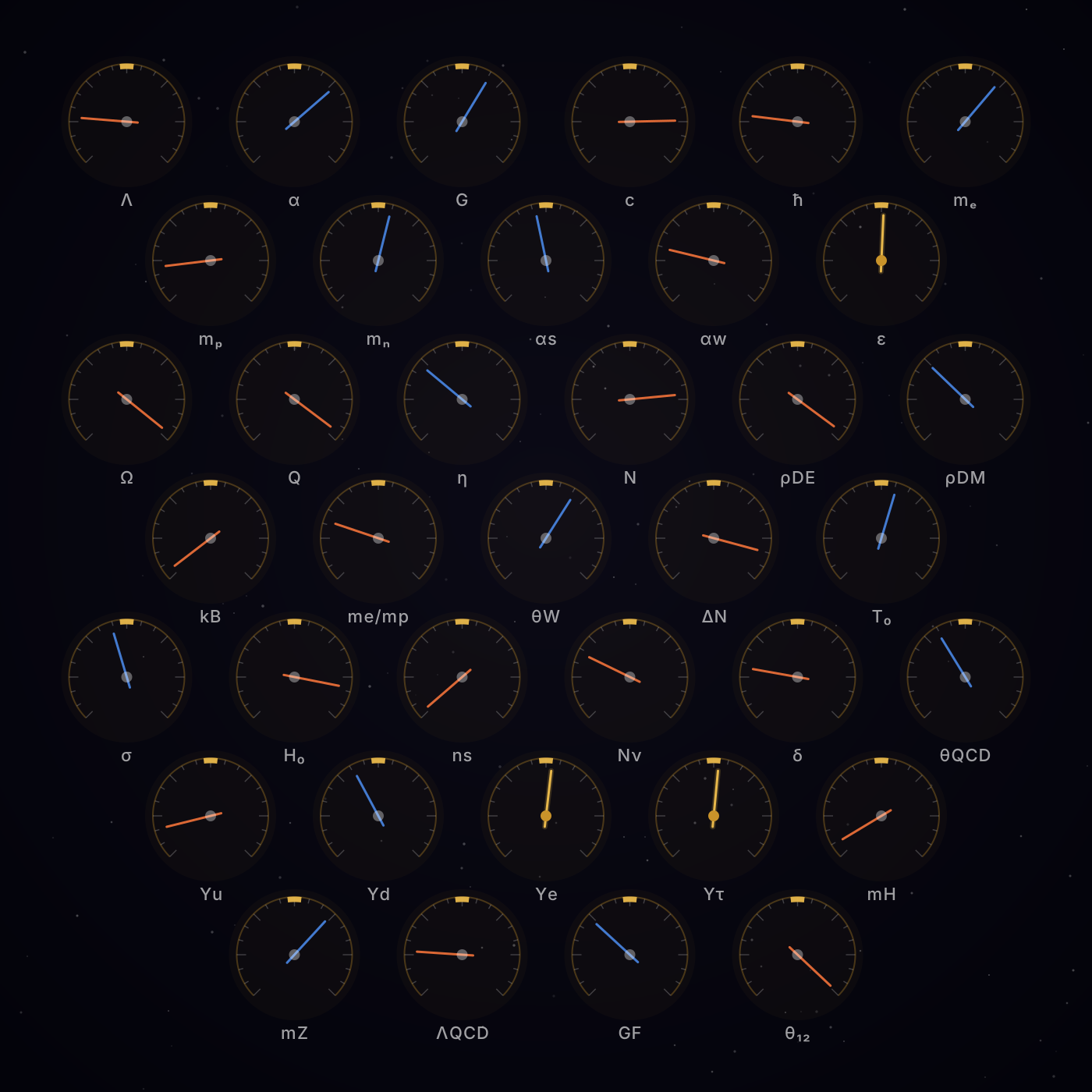
Of the 37 constants, these eleven are the most exquisitely tuned. Each one individually would destroy the universe if altered by the margin shown. All 37 must hold simultaneously.
Λ
Cosmological Constant
≈ 1.089 × 10⁻⁵² m⁻²
The energy density of the vacuum. If even fractionally larger, the universe expands too fast for stars or galaxies to form. If negative by a similar fraction, it collapses immediately.
Viable margin: 1 part in 10⁶⁰
α
Fine Structure Constant
≈ 1/137.036
Controls the strength of electromagnetic interaction. Change by >4% and stars cannot produce carbon in their cores — the element on which all biochemistry depends.
Viable margin: ±4%
G
Gravitational Constant
6.674 × 10⁻¹¹ N·m²/kg²
If gravity were stronger by 1 part in 10³⁶, all stars would be blue dwarfs too hot and short-lived for life. Weaker, and no stars form at all.
Viable margin: 1 part in 10³⁶
mₑ/mₚ
Electron-Proton Mass Ratio
≈ 1/1836.15
This ratio determines whether chemistry is possible. If the electron were heavier, atomic orbitals would collapse into the nucleus. No stable atoms. No chemistry. No life.
Viable margin: very narrow band
Q
Density Perturbation Amplitude
≈ 1 part in 10⁵
The tiny density variations in the early universe. Too smooth: no galaxies form. Too lumpy: only black holes form. This Q value gives us both stars and galaxies.
Viable margin: 1 part in 10⁵
ε
Nuclear Efficiency (0.007)
0.007 (7/10 of 1%)
The fraction of hydrogen mass converted to energy in fusion. At 0.006, hydrogen wouldn't fuse at all. At 0.008, no hydrogen would survive the Big Bang.
Viable range: 0.006 – 0.008 only
Ω
Cosmological Mass Density
Ω ≈ 1.000000 ± 0.000001
The density of the universe relative to the critical density. If Ω were 1.000001, the universe would have collapsed within seconds. If 0.999999, expansion outpaces star formation.
Tuned to 1 part in 10⁶⁰ at Planck time
αs
Strong Nuclear Force
≈ 0.1181 (at Z mass)
Stronger by 2%: all hydrogen fuses to helium before stars ignite — no hydrogen for water. Weaker by 2%: nuclei don't bind — only hydrogen exists, no carbon, no chemistry.
Viable margin: ±2%
αw
Weak Nuclear Force
≈ 10⁻⁵ (Fermi constant)
Controls radioactive decay and stellar nucleosynthesis. Weaker: neutrons can't decay — universe is all neutrons. Stronger: supernovae can't expel heavy elements into the galaxy.
Viable margin: very narrow
η
Baryon-Photon Ratio
≈ 6.1 × 10⁻¹⁰
The matter:antimatter asymmetry that left a residue of 1 matter particle per billion photon pairs after annihilation. A different ratio means no matter — or all matter collapses into black holes.
Viable margin: 1 part in 10⁹
ρ
Dark Matter Density
≈ 0.265 of critical density
Dark matter provides the gravitational scaffolding for galaxy formation. Without it at this precise density, no galaxy clusters form and stars drift without structure.
Must fall within narrow density range
 Universe Dead