Governments did not fail to provide beauty through negligence. They tried to eliminate it on principle, as a moral position, an ideology of honesty. The theory was tested at government scale, across thirty years, on human beings who had no say in the experiment. It failed. The failure is the argument.
I. The Experiment — Thirty Years at Government Scale
Between 1950 and 1980, the governments of the United States, Britain, France, and their allies conducted the largest involuntary experiment in architectural aesthetics in human history. The subjects were citizens who needed housing, public buildings, universities, and government offices. The theory being tested: that beauty is optional — a bourgeois decoration, culturally contingent, architecturally dishonest. Strip it away. Build with raw concrete, exposed structure, the honest geometry of function. Call it liberation.
demolished in the US alone
1950 – 1980
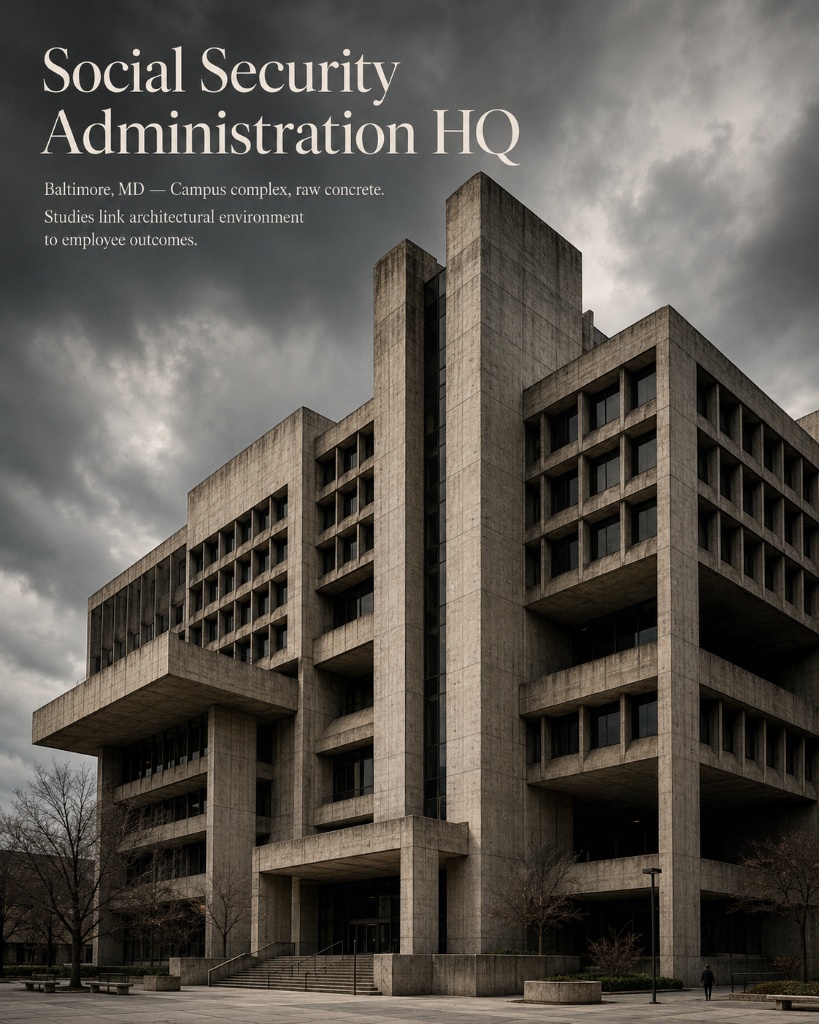
J. Edgar Hoover FBI Building
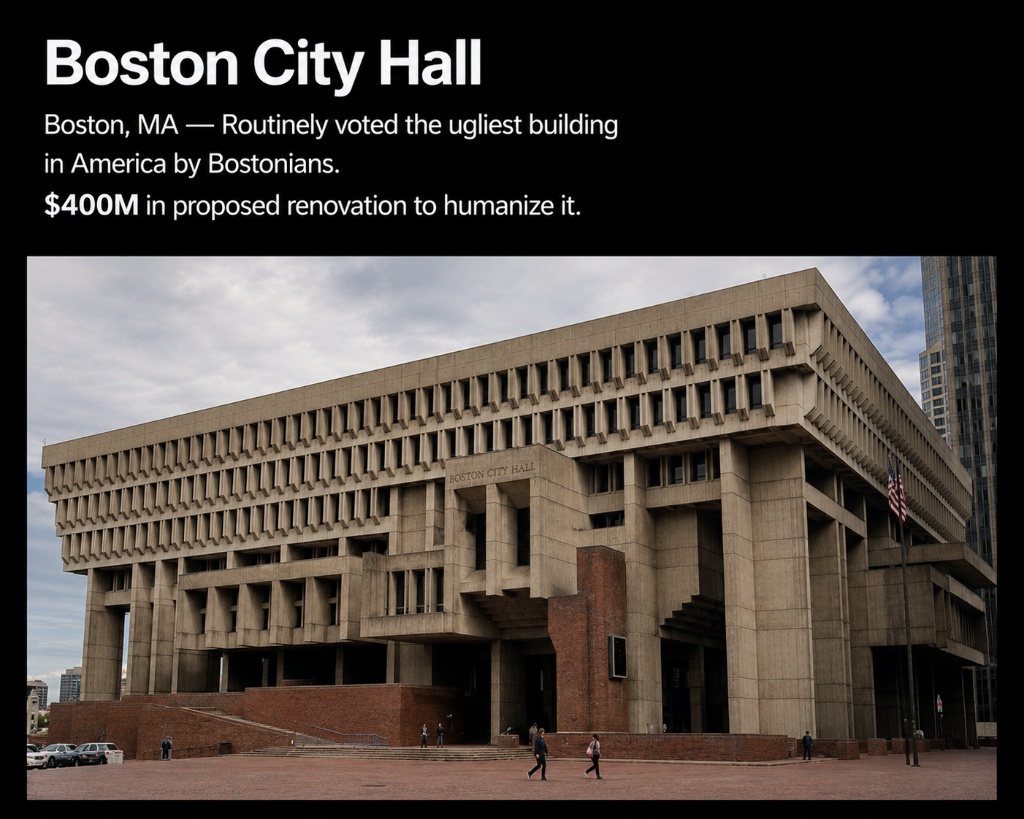
Boston City Hall
preferred brutalist over classical
The experiment had a clear beginning. It had named architects, named theories, named buildings. It had government funding at a scale no private patron could match. It ran for thirty years — long enough to collect outcomes, document behavior, measure the human response. The outcomes were consistent across every country that ran the experiment. Vandalism. Social disintegration. Psychological damage. Avoidance. And eventually: demolition.
Pruitt-Igoe in St. Louis was the definitive case. Designed by Minoru Yamasaki — the same architect who later designed the original World Trade Center — it won awards before it opened. It was demolished with explosives between 1972 and 1976. Not because of structural failure. Because the people living in it could not bear to live in it, and the behavior that resulted was beyond the capacity of any social program to correct. The environment itself was the cause. The architecture was the experiment. The demolition was the verdict.
II. The Ideology — Ornament Is a Crime
The experiment did not arise from indifference. It arose from a theory, carefully argued, widely adopted, institutionally enforced. Two architects above all were responsible for translating that theory into concrete.
Adolf Loos · "Ornament and Crime" · 1908 Viennese architect and theorist. His 1908 essay argued that the use of ornament in design was not a mark of culture. It was a moral failure, a sign of arrested development. "The evolution of culture is synonymous with the removal of ornament from utilitarian objects." A civilized person, he argued, does not need decoration. To want beauty is to want something primitive, dishonest, and immature. This single essay became the ideological foundation for three generations of architects who believed that removing beauty from buildings was an act of moral hygiene.
Le Corbusier · "Towards a New Architecture" · 1923 Swiss-French architect and urbanist. Called the house "a machine for living." His theoretical framework — that ornament was dishonest and architecture should express raw structure (beton brut — raw concrete) — became the implementation manual for Loos's ideology. Le Corbusier designed utopian "radiant city" plans that demolished existing neighborhoods and replaced them with towers in a park. The towers were built. The parks turned into crime corridors. The "radiant" city produced darkness.
"Ornament Is a Crime. The Machine Should Live Here."
The architects had a theory. The theory was coherent, articulable, and widely taught. Architecture schools adopted it. Government procurement departments applied it. Every civic project after 1950 ran through its assumptions: beauty is subjective, ornament is dishonest, functional expression is sufficient. The theory's proponents were not stupid. They were wrong. And the consistency with which they were wrong — across every country, every demographic, every function type — is evidence that they had violated something real, well past coincidence.
III. The Evidence — Buildings That Failed Their People
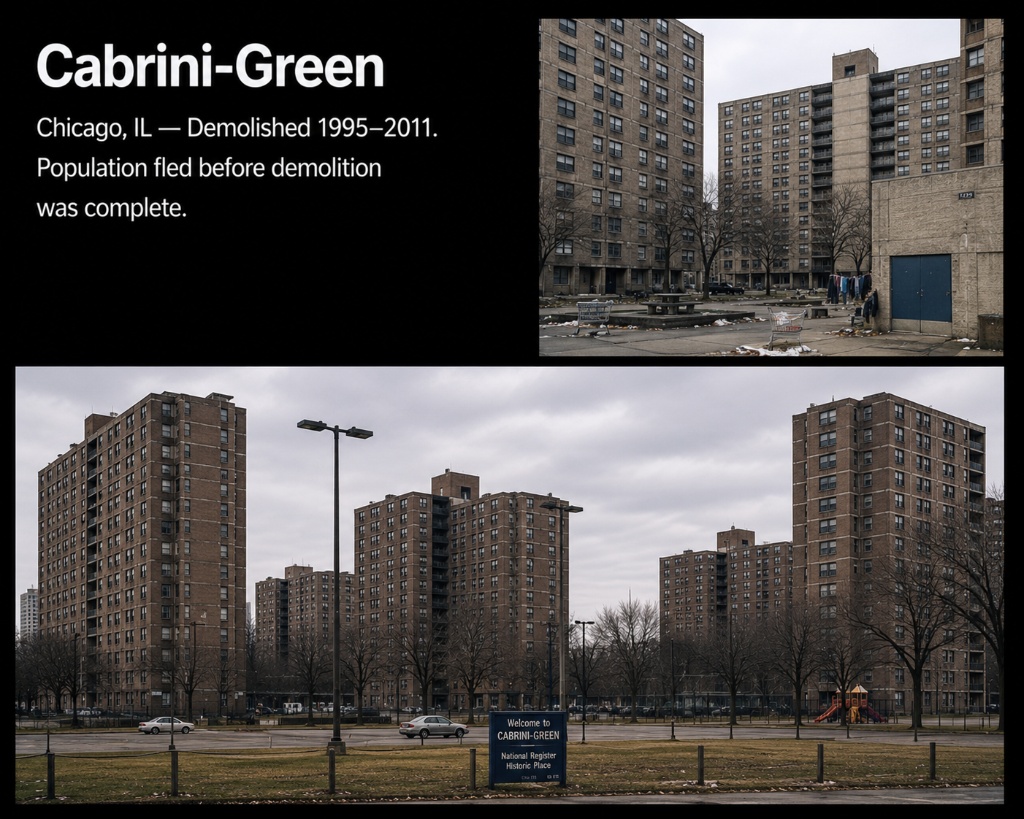
Minoru Yamasaki. 33 towers. Prize-winning before a resident moved in. Within three years, vacancy exceeded 50%. Crime rates surpassed the surrounding neighborhood before the buildings were fully occupied. The design eliminated defensible space, removed eyes from streets, isolated families in vertical corridors nobody chose to use. The buildings were demolished by the US government between 1972 and 1976 using explosives. The architect later designed the World Trade Center. The experiment in beauty-free public housing was ended not by politics but by the behavior of the people who were forced to live in it.
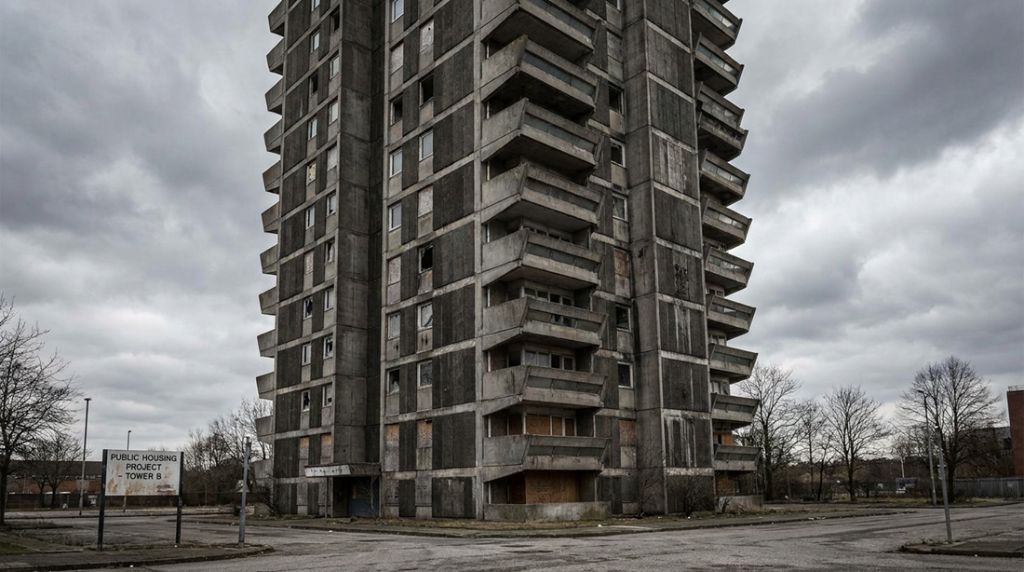
Roger Ulrich's landmark study in Science (224:420–421) compared surgical patients with a view of trees to those facing a brick wall. The patients who could see nature required 8.5 fewer days in hospital, needed significantly fewer painkillers, and had lower complication rates. The study had no confounds. Same surgery. Same demographics. Different view. The environment — specifically, whether it contained beauty — was the only variable. This is medical outcome data rather than preference data. Beauty produces measurably different physiological outcomes than ugliness.
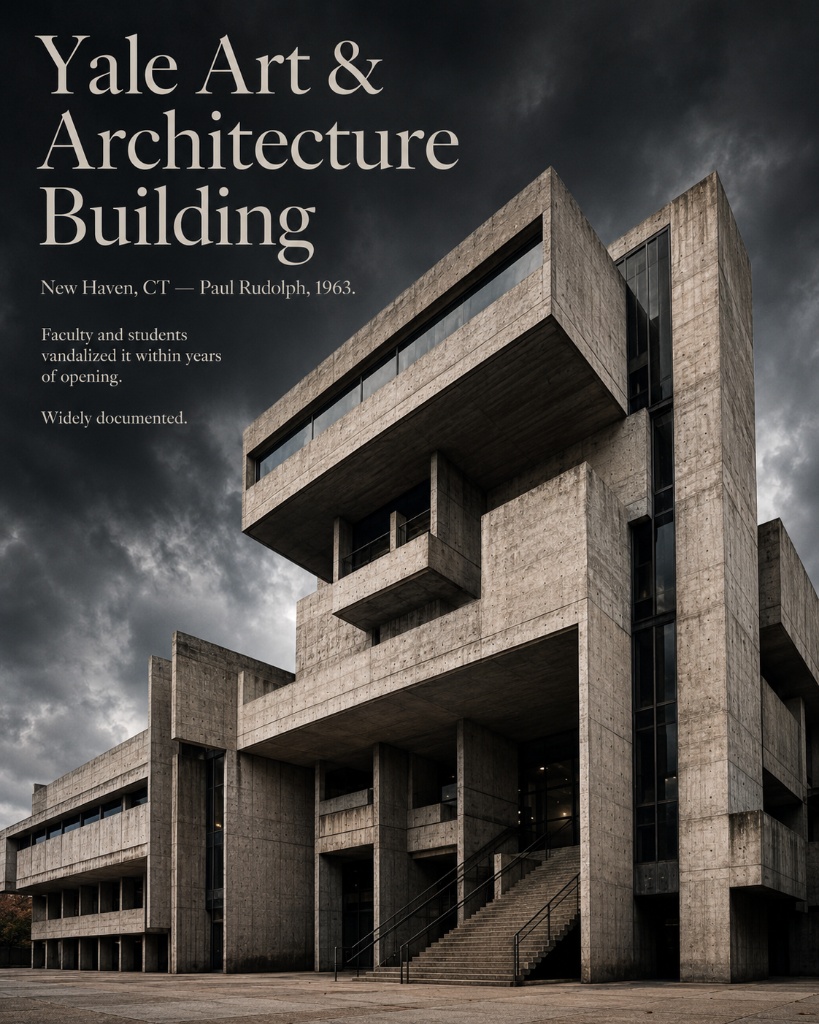
Ulrich, R.S. (1984). "View through a window may influence recovery from surgery." Science, 224(4647), 420–421.— Paul Rudolph · Architect, Yale Art & Architecture Building · 1963 · (The students responded by setting a fire in the building.)
IV. The Control — What Architecture Looked Like Before
The modernist architects presented their work as progress — as the liberation of human beings from sentimental attachment to decorative dishonesty. But there was a comparison available. The same governments, serving the same populations, had built differently in the century before. The Lincoln Memorial. Grand Central Terminal. Union Station. The Library of Congress. These buildings were not merely functional. They were designed to make the person entering them feel something. They still do. A century later, people travel to stand inside them.
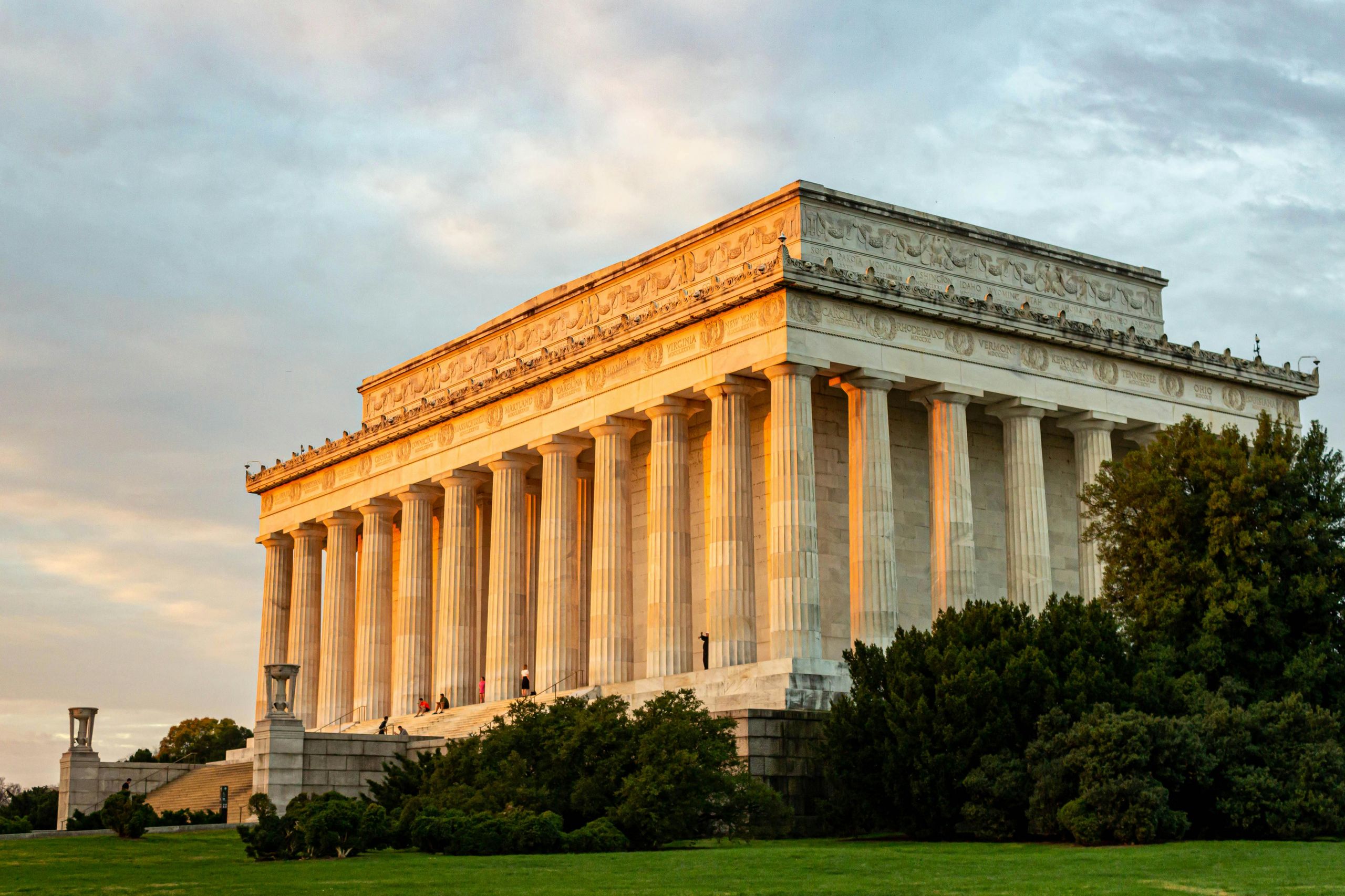
What Pre-Brutalist Federal Architecture Did
The Lincoln Memorial, the Library of Congress, Grand Central Terminal, Union Station — built with columns, proportion, symmetry, natural materials, carved ornament. The explicit intention was to make human beings feel something when they entered. These buildings are visitor destinations a century later. People travel to stand inside them. They produce awe in people who have no knowledge of their political or historical significance. They were not trying to be honest. They were trying to be beautiful. They succeeded at both.
Response: Pilgrimage. People return. Voluntarily. Repeatedly. Across generations.
What Post-1950 Federal Architecture Did
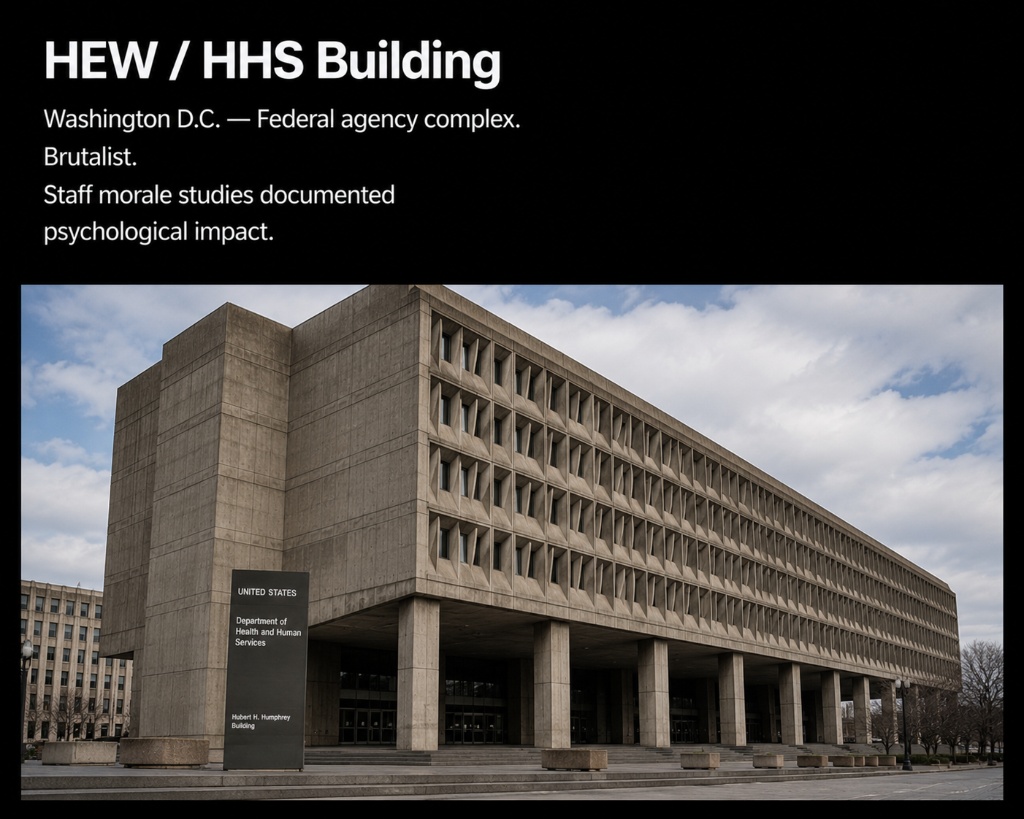
The J. Edgar Hoover Building. The Hubert H. Humphrey Building. The Robert C. Weaver Federal Building. Raw concrete. Hostile angles. No ornament. No proportion referencing the human scale. Staff surveys, urban studies, and journalism consistently document the same finding: people dislike being inside these buildings. Many have been condemned, renovated, or are proposed for demolition. None of them are visited for pleasure. None of them produce awe in anyone.
Response: Avoidance. People leave when the workday ends. They do not return.
The modernist architects believed they were liberating people from sentimental attachment to decorative falsehood. The people they were liberating consistently reported, in surveys, in behavior, and eventually in the physical act of demolishing the buildings, that they hated the result. The experiment ran for thirty years before the political and institutional will to continue it collapsed. Not from aesthetic argument. From the documented social costs of the theory's application.
V. The Argument — What the Failure Proves
The governments that built without beauty did not destroy the human need for beauty. They demonstrated it by its absence. The residents of Pruitt-Igoe voted with their behavior: vandalism, flight, social disintegration. The architects believed beauty was a bourgeois conceit. The residents demonstrated it was a human requirement, as real as food, as cross-cultural as mathematics.
"Beauty will save the world."
— Fyodor Dostoevsky · The Idiot, 1869 · The brutalism experiment tested this claim. It failed. His claim survived.
The materialist account must explain why the removal of beauty, if beauty is merely a cultural preference, produces such consistent, cross-cultural, income-independent psychological damage. Brutalism was applied to wealthy university campuses and to impoverished public housing. The outcome was the same. It was applied in America, Britain, France, and the Soviet Union. The outcome was the same. The pattern shows the profile of a requirement that was violated rather than a preference.
When beauty was removed from human environments — deliberately, ideologically, at the largest scale governments could manage — the result was not liberation from bourgeois sentiment. It was documented psychological damage. Consistent across income levels. Consistent across nationalities. Consistent across demographics. The experiment ran for thirty years. It failed. The failure was not a coincidence. It was the human requirement for beauty, asserting itself against the theory that tried to eliminate it.
Pattern: violation → damage · Implication: beauty is not optional · Conclusion: it was placed there
Involuntary Positive Arrest
The cathedral produces reverence in people with no religious belief. The Lincoln Memorial produces silence in people who came only to take a photograph. Grand Central Terminal produces orientation and calm in people rushing for trains. The Great Barrier Reef produces silence in people who came to party. Hospitals with window views of nature produce faster patient recovery than hospitals without them (Ulrich, 1984). Beauty produces involuntary positive arrest — the organism stops, orients toward, and is changed by the contact.
Pattern: involuntary orientation toward. The organism approaches, lingers, returns.
Involuntary Negative Response
Pruitt-Igoe produced crime rates that exceeded its catchment area before the buildings were fully occupied. Boston City Hall produces documented visitor avoidance — people find reasons not to enter. Brutalist university buildings were vandalized by students within years of opening. Malls without natural light produce measurably reduced dwell time. Hospitals without windows produce measurably worse patient outcomes. Offices without natural beauty produce measurably higher staff turnover. The pattern is mechanical and consistent.
Pattern: involuntary aversion. The organism avoids, deteriorates, flees. Given any exit, it takes it.
VI. The Recovery — What an Architect Who Doesn't Hate You Would Build
The thirty years of brutalism were not a permanent condition. They were a theory — applied deliberately, at government scale, to human beings who had not consented to be subjects of the experiment. The theory failed. The buildings were demolished, renovated, or abandoned. And in their place — slowly, imperfectly, with enormous resistance from the architectural profession — beauty began to return. Not because policy required it. Because the people always wanted it, and eventually the people got what they wanted.
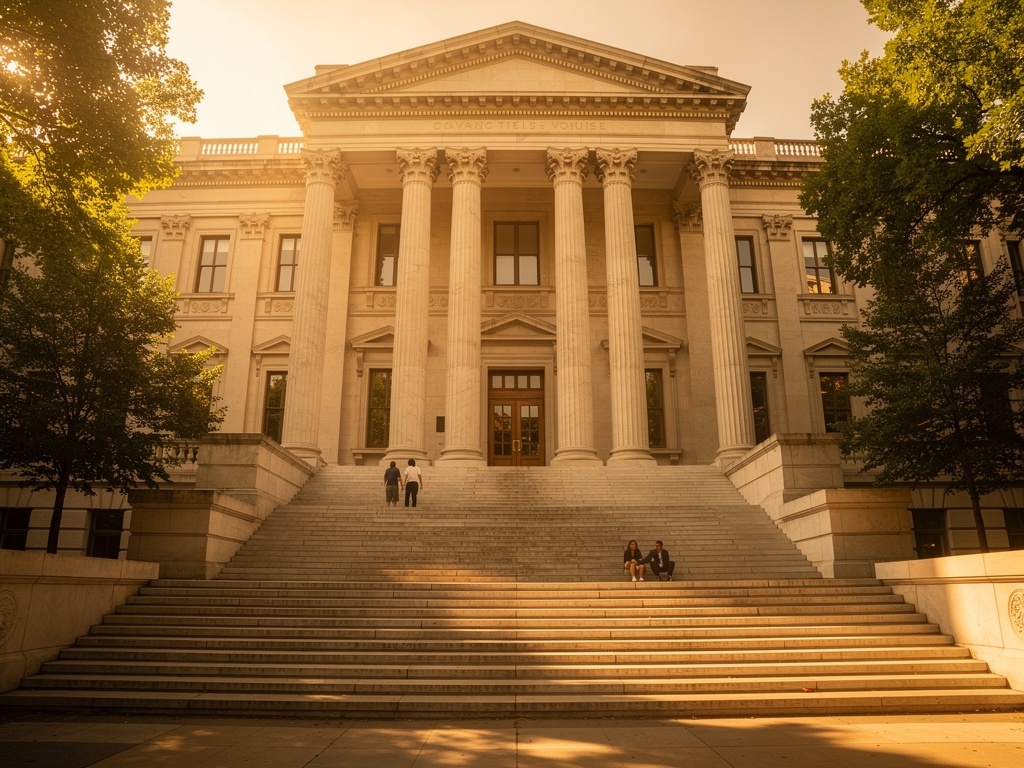
What an architect
who doesn't hate you
would build.
It has columns. It uses materials that age gracefully. It acknowledges that the person entering is not a unit of productivity to be processed. It honors the human aesthetic faculty. It looks like it was made for you.
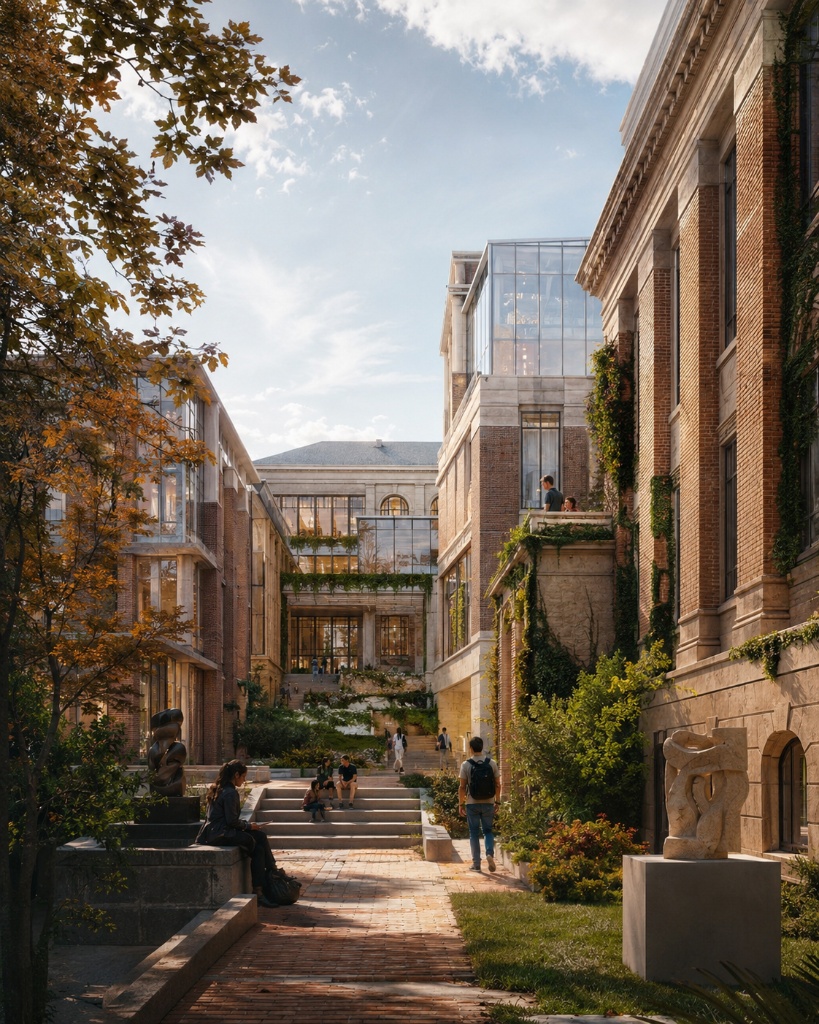
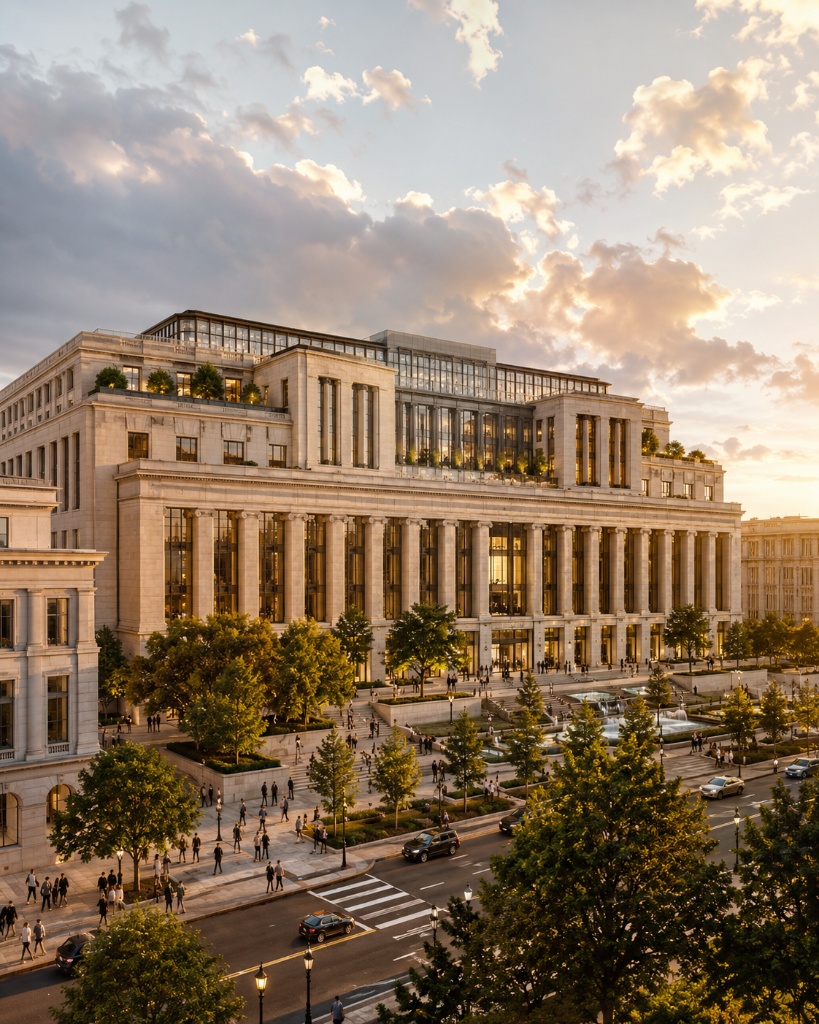
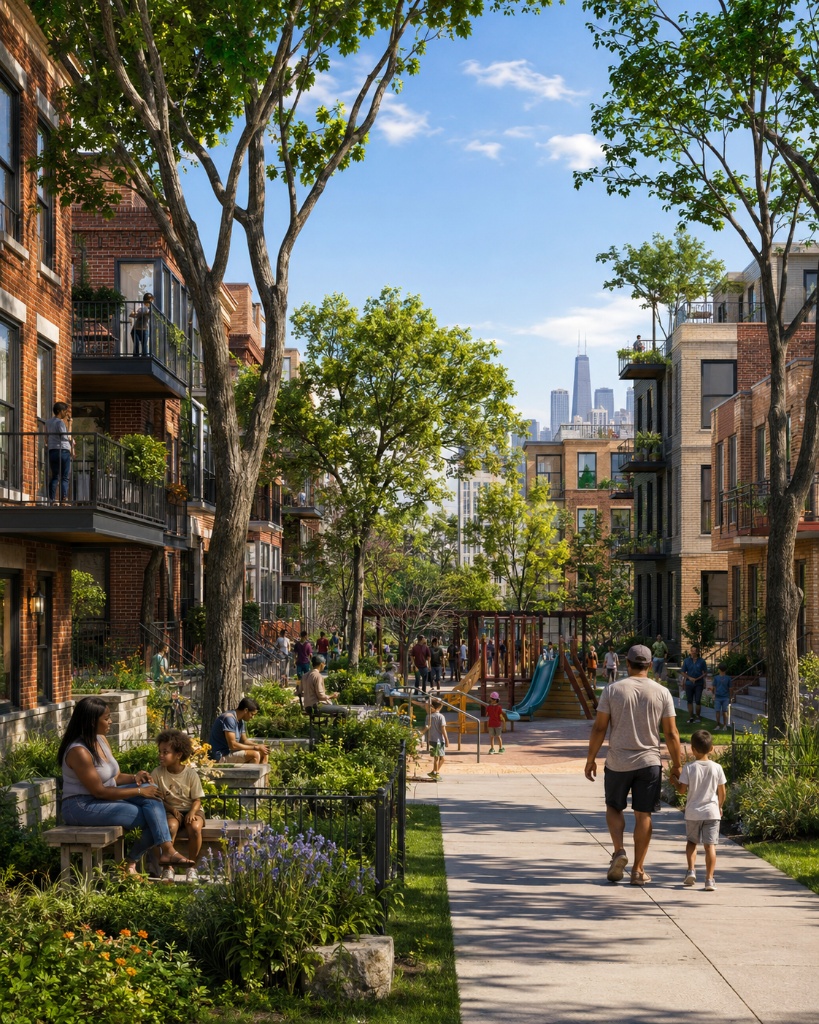
Brutalism's failure answers the "mere preference" objection. But it raises the larger question: if beauty is a requirement and not a preference, if its removal damages human beings with the consistency of a physical injury, then beauty is written into the organism rather than culturally constructed. And the question this argument asks is: who wrote it there?
Sources & References
- Ulrich, R.S. (1984). "View through a window may influence recovery from surgery." Science, 224(4647), 420–421. The foundational empirical study establishing that the architectural environment — specifically, the presence or absence of natural beauty in a window view — produces measurably different medical outcomes. Surgical patients with a view of trees recovered in 7.96 days on average versus 8.7 days for those facing a brick wall, required fewer painkilling doses, and had fewer minor post-surgical complications. Same surgery. Same demographics. Environment was the only variable. Find →
- Bristol, G. & Saliga, P. (2012). The Pruitt-Igoe Myth [Documentary]. First Run Features. Documentary examining the demolition of Pruitt-Igoe and the documented social consequences of modernist public housing design. Addresses and refutes the mismanagement hypothesis directly: vandalism began within months of opening; crime rates exceeded the surrounding area before full occupancy. The architecture was causal, not incidental. Site →
- Loos, A. (1908). "Ornament und Verbrechen" [Ornament and Crime]. Lecture/Essay. "Ornament is a crime" — the foundational ideological manifesto of design stripped of beauty. Argues that decoration is a moral failure and a sign of primitive development. The text that launched three generations of architects who believed removing beauty from buildings was an act of moral hygiene. Read it alongside the Pruitt-Igoe outcome data. The gap between the theory's claims and its results is the argument. Find →
- Le Corbusier (1923). Vers une Architecture [Towards a New Architecture]. Crès. "A house is a machine for living." The ideological implementation manual for brutalism. Contains the arguments for beauty-free functional architecture that were applied in public housing projects globally. Read alongside the documented outcomes at Pruitt-Igoe and Cabrini-Green — the gap between the theory's predictions and its results is the argument. Archive →
- Executive Order 13967 (December 18, 2020). "Promoting Beautiful Federal Civic Architecture." The White House. Federal order requiring new federal buildings to favor classical and traditional architecture. The debate surrounding its issuance, partial implementation, and contested rescission is the most recent political document of the government's formal engagement with the question of whether beauty should be an architectural requirement. The opposition argued beauty is subjective. The support cited the Pruitt-Igoe data. The debate has not concluded. Register →
- Wilson, E.O. (1984). Biophilia. Harvard University Press. Wilson's hypothesis, that human beings have an innate, biologically-based affiliation with living systems and natural environments, provides the evolutionary framework for why beauty-hostile environments produce consistent psychological damage. Biophilia is a deep structural feature of the organism rather than a preference, and Brutalism violated it. Find →