Awe is the one emotion that cannot be faked and cannot be explained away. Fear has a survival account. Hunger has a survival account. Even love has a survival account, of a kind. Awe does not. When you stand at the edge of the Grand Canyon, or look up at the Milky Way on a moonless night, or watch three minutes and forty seconds of totality, something happens that the materialist account cannot fully absorb. The response is involuntary. It crosses demographics, cultures, and beliefs. And it leaves a residue.
I. Ohio, April 8, 2024: The Eclipse
Our Family Traveled to the Path of Totality
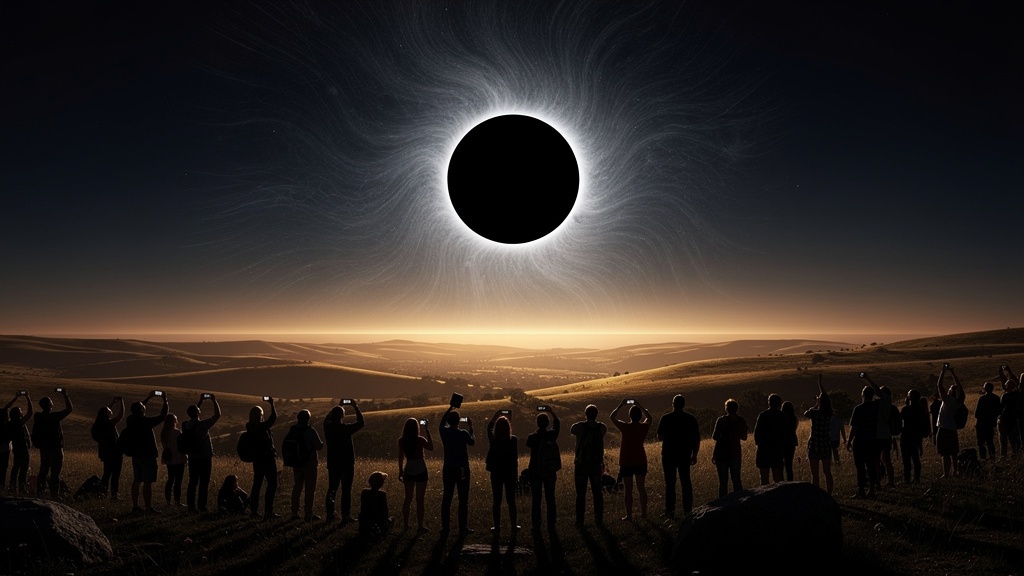
Our family traveled to Ohio for the eclipse: my son, my daughter, her husband. In the moments of totality, for three minutes and forty seconds, you can look directly into the sun. The weather changed. The temperature dropped eight degrees in four minutes. The animals changed: birds landed, crickets started, bats emerged. The people changed. Everyone went silent. The awe was involuntary. It cannot be denied.
This is a human reaction rather than a religious one. Believers and atheists alike went silent. The difference between the animal silence and the human silence is the entire argument.
— Daniel K. Hedrick · GODISNOWHERE
The eclipse path crossed from Texas to Maine. Millions of people gathered in that corridor: Christians, atheists, scientists, children, elderly people who had waited decades for it. The totality response was uniform. Nobody laughed. Nobody checked their phone. The crowd went silent in a way that crowds almost never go silent voluntarily.
The animals went silent too, but then resumed. Birds landed because the light pattern triggered their roosting system. Crickets started because their temperature threshold was crossed. Bats emerged because their light-level threshold was crossed. Their systems were triggered, they responded, the trigger passed, they resumed. No residue. No change. Mechanical response to mechanical input.
The humans were different. They went silent because something in the experience exceeded their categories. Not just a light-level change. Not just a temperature drop. Something that for three minutes and forty seconds felt, involuntarily across all demographics, like contact with something real that was larger than themselves. The animals' silence was a reflex. The human silence was recognition.

Triggered · Responded · Resumed
Birds landed: roosting threshold crossed. Crickets started: temperature threshold crossed. Bats emerged: light-level threshold crossed. Stimulus arrived, behavior changed, stimulus ended, behavior reset. Every animal response was mechanical, predictable, and reversible. None of them were changed by the eclipse.
Pattern: stimulus → response → reset. No residue.
Silenced · Arrested · Not Quite the Same
The people went silent before totality and remained silent after it ended. Many cried without knowing why. The journalist reporting it was moved despite professional distance. The atheist physicist described "feeling small in a way that mattered." The response exceeded the category of light-level change. Something residual happened that the animal response does not account for.
Pattern: contact with something that exceeded existing categories. Residue: a question.
II. What Awe Actually Is: The Keltner & Haidt Research
In 2003, psychologists Dacher Keltner and Jonathan Haidt published the first systematic research on awe as a distinct emotion. Their finding: awe is not fear, not joy, not aesthetic pleasure: it is its own category. It has two defining features: vastness (the perceived scale exceeds current categories) and need for accommodation (the experience forces a change in the perceiver's mental model). Both features must be present. Neither is sufficient alone.
Vastness
The perceived scale (physical, moral, conceptual) exceeds what the person's current framework can absorb. The Grand Canyon is vast. A perfect performance of the Goldberg Variations is vast. The eclipse corona at totality is vast. Vastness is not only size: it is category-exceeding scale in any dimension.
Need for Accommodation
The experience forces a change in the perceiver's mental model. You cannot absorb the Grand Canyon on the first look and file it away. Something has to shift in how you organize your experience of scale, time, or significance. Keltner calls this accommodation: the structure of how you understand the world has to expand to include what you just encountered.
Prosocial Outcomes
Awe reliably produces measurable prosocial behavior: increased generosity, reduced self-focus, greater sense of connection to others, reduced entitlement. This is documented across multiple experimental conditions. Awe makes people less selfish. The mechanism is not clear, but the pattern is consistent and replicable.
Not Fear, Not Pleasure
Fear produces avoidance. Pleasure produces approach and repetition. Awe produces neither; it produces arrest: you stop, you cannot look away, you cannot process it, and you cannot leave unchanged. This is why Otto called the numinous experience both terrifying and irresistibly attractive simultaneously; the two responses coexist in the same moment.
The empirical finding that matters most: awe is not culturally constructed at the trigger level. The vastness + accommodation structure fires across all studied populations. Indigenous children in the Amazon have the same neurological profile during awe-triggering events as astrophysicists at Caltech. The response arrives built in rather than taught, which means the faculty was calibrated before any culture had the chance to calibrate it.


III. The Mysterium Tremendum: Rudolf Otto, 1917
In 1917, the German theologian Rudolf Otto published Das Heilige, translated as The Idea of the Holy. He was trying to name something that rational theology had repeatedly failed to capture: the raw, pre-conceptual experience of the sacred. He called it the numinous. His term for its structure: mysterium tremendum et fascinans: the mystery that is simultaneously terrifying and irresistibly attractive. Both at once. Not one or the other.
— Rudolf Otto · The Idea of the Holy (1917)
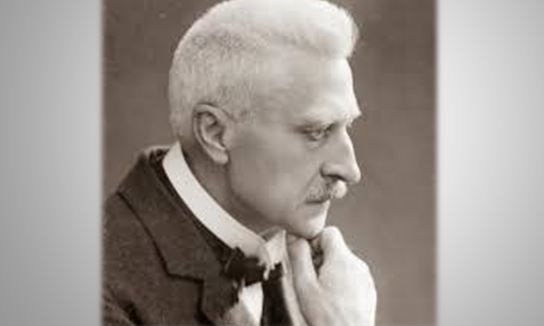
Otto's contribution was to argue this experience is sui generis: it belongs to its own category. It cannot be reduced to ethics, aesthetics, psychology, or biology. It is its own thing. The eclipse produces exactly this. You want to look away. You cannot look away. The corona is terrifying and beautiful in the same instant, for the same reason.
The numinous arrives as a feeling that precedes the concept of God rather than a feeling about God, a raw pre-conceptual encounter with something that exceeds all categories and demands a response. Otto's argument is that every religion, in every culture, is a different attempt to name and respond to this same pre-conceptual encounter. The encounter comes first. The theology comes after. This is the foundation of the argument from awe.
"The numinous is not a religious construct. It is the raw material from which every religious construct is made. It arrives uninvited, in people with no theological framework, and insists on being accounted for."
IV. Surprised by Joy — C.S. Lewis and the Argument He Couldn't Dismiss
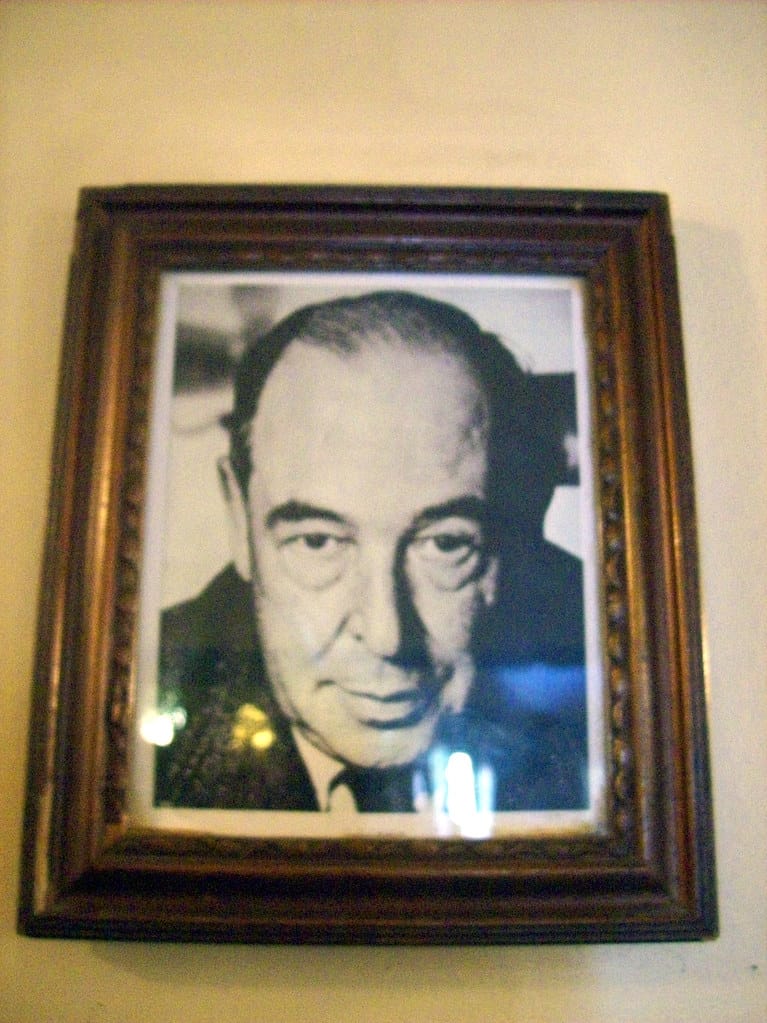
C.S. Lewis spent much of his early life trying to explain away his own version of the awe response. As a committed atheist and Oxford don, he was embarrassed by what he called "Joy" — a particular stabbing longing triggered by Norse mythology, by a phrase of music, by a distant green hillside. He did not want it to mean anything. It kept arriving anyway.
— C.S. Lewis · Surprised by Joy (1955)
Lewis eventually concluded that Joy was not an experience to be analyzed but a signal to be followed. The longing always pointed beyond the thing that triggered it. The beauty of the hillside was not the source — it was a pointer. The question the longing kept asking was: what are you pointing at?
Lewis's intellectual journey is significant precisely because he did not want to follow the pointer. He was a committed atheist with professional reasons to remain one. He was not susceptible to emotional manipulation. He describes his conversion in Surprised by Joy as "the most reluctant convert in all England", dragged kicking into the admission that the Joy he kept experiencing was a signal pointing beyond any natural object. The awe response became his primary argument.
— C.S. Lewis · Mere Christianity (1952)
The argument is not that awe proves God. The argument is that awe is a faculty — a receptor — tuned to something. No receptor evolves without a corresponding signal. Hunger presupposes food. Fear presupposes danger. The awe response, tuned to vastness-that-exceeds-categories, presupposes that there is something vast enough to trigger it — something that is not merely large but genuinely transcendent. The question is whether nature supplies that object or whether nature is itself pointing beyond itself.


Each of these triggers a documented awe response across all studied cultures. None of them are survival-relevant. The faculty that fires is calibrated to something other than what keeps you alive.
V. The Residue: What Awe Leaves Behind
In Ohio, looking up at the corona, the question was impossible to avoid. The eclipse was not beautiful the way a painting is beautiful. It was beautiful the way something real is beautiful, something that existed before you arrived, will continue after you leave, and does not require your approval. The animals went quiet and resumed. We went quiet and were not quite the same. The difference between those two silences is the argument.
The materialist account of awe is that it is a misfiring of the landscape-detection system at unusual scale — the brain's "safe open space" response triggered by the sky, the corona's apparent size, and the sudden darkness. On this account, the awe response is a category error: the brain applies a response designed for physical vastness to something that is merely a geometric coincidence (the moon happens to be exactly the right apparent size to cover the sun).
The problem with that account is that it cannot explain the residue. After the eclipse, people changed what they did with their time. They described feeling that certain things they had been worried about were not important. They described a sense that the universe was not indifferent — that the experience was not an accident. These fall outside survival-relevant responses and outside the outputs of a landscape-detection system resuming normal function. They are the outputs of a faculty that encountered something real and was altered by the encounter.

"The awe response is a faculty. Every faculty presupposes a corresponding object. The object of awe — vastness that exceeds all categories, that leaves a residue, that alters the perceiver — is not adequately described by any natural object. The faculty points beyond nature. The question is whether you are willing to follow the pointer."
Sources & References
- Keltner, D. & Haidt, J. (2003). "Approaching Awe, a Moral, Spiritual, and Aesthetic Emotion." Cognition & Emotion, 17(2), 297–314. First systematic psychological research on awe. Key findings: awe involves vastness + need for accommodation; reliably produces prosocial outcomes; not reducible to fear or pleasure. Find →
- Otto, R. (1917). Das Heilige [The Idea of the Holy]. Translated John W. Harvey (1923). Oxford University Press. Coined "numinous" and "mysterium tremendum et fascinans." Argues the sacred is sui generis, irreducible to ethics, aesthetics, or evolutionary biology. Archive →
- Lewis, C.S. (1955). Surprised by Joy: The Shape of My Early Life. Geoffrey Bles. Lewis's autobiography of conversion, centered on the Joy experience — the involuntary stab of longing that kept arriving. The most intellectually honest account of the awe-to-theism trajectory by a former committed atheist. Library →
- Lewis, C.S. (1952). Mere Christianity. Geoffrey Bles. Contains the "desire which no experience in this world can satisfy" argument — Lewis's formalization of the Joy/awe response as evidence for a transcendent object. Library →
- Piff, P.K., Dietze, P., Feinberg, M., Stancato, D.M., & Keltner, D. (2015). "Awe, the small self, and prosocial behavior." Journal of Personality and Social Psychology, 108(6), 883–899. Experimental documentation that awe reliably reduces self-focus and increases prosocial behavior. The "small self" finding — awe makes people less selfish — replicated across multiple conditions. Find →