The conversation about biology and design has been almost entirely reduced to DNA - the famous double helix, the four-letter code, 3.2 billion base pairs. That argument is powerful enough on its own. But focusing only on DNA is like analyzing a symphony by examining one instrument. The cell does not run on one communication system. It runs on at least twelve - simultaneously, interdependently, in real time - each regulating, error-checking, and cross-referencing the others. The question is not whether this degree of coordinated coherence points somewhere. The question is whether any honest person can maintain it arrived by accident.
Each ring lights as it comes online. None arrived later than the others.
Hover any node to explore · Click to zoom in
Every living cell runs twelve communication systems simultaneously: DNA, epigenetics, histone codes, RNA regulation, error correction, protein folding, cell signaling, and five more. None can function without the others. All had to be present at the same moment, from the beginning. The probability of this arising without direction is effectively zero.
DNA cannot replicate without Error Correction, but Error Correction reads DNA to know what to fix. Epigenetics writes marks on Histones, but Histones control whether Epigenetic machinery can access the genome. RNA Regulation fine-tunes the output of DNA transcription, but RNA is synthesized by machinery encoded in DNA.
Every arrow on the map is a dependency. Every node that lights up when you hover is a system that cannot be removed without killing the cell — and could not have evolved in isolation.
The evolutionary challenge is simultaneity, more than complexity.
See It Animated
◈ Deep Sophistication · Visual Map - All 12 Systems →I. DNA - The Master Archive
The human genome contains 3.2 billion base pairs arranged in sequences not determined by the chemistry of the bases themselves. Francis Crick called this the "sequence hypothesis" in 1958: the bases are physically equivalent in bonding - they do not attract their neighbors by chemical affinity. The information is entirely in the arrangement, not the substance. Claude Shannon's information theory applies directly: DNA is a discrete four-symbol code whose sequences are not derivable from any rule within the symbol set. The code is arbitrary in the same precise sense that English is arbitrary. The word "dog" has no physical resemblance to a dog. The relationship between sequence and function is assigned, not compelled by physics.
Hubert Yockey - a physicist who applied Shannon's mathematics to biology with no theological agenda - calculated the probability of a single functional cytochrome c sequence arising by chance and concluded it was effectively zero. That was for one small protein. The genome contains approximately 20,000 protein-coding genes. The math does not improve with scale.
II. The Full Communication Stack
DNA is the archive. But the cell does not read DNA directly into function. Between the archive and the operational organism lies an interlocking web of regulatory, translational, and error-correction systems. Each is independently sophisticated. Each presupposes the others. None operates in isolation.
3.2 billion base pairs. A four-letter code whose sequences are not determined by any chemical law. The master specification for every protein the organism can build. Organized in hierarchical layers - genes, regulatory regions, introns, repeated elements - most once called "junk" until function was found. The ENCODE project (2012) found biochemical function in at least 80% of the genome. The archive is read, regulated, and dynamically managed rather than passive, across the organism's entire lifetime.
Information · Archive · Digital CodeAbove the DNA sequence sits a second layer of heritable information that does not change the underlying code but controls which parts are read, when, and at what intensity. Epigenetic marks respond to environmental signals and can persist across generations. This is variation without mutation: the sequence is unchanged; the expression pattern is rewritten. Natural selection did not write this system. It requires the system to already exist before selection can operate on anything it produces.
Regulation · Heritable · Non-MutationalDNA is wound around histone proteins. Histones are chemically tagged - acetylated, methylated, phosphorylated - and these tags determine whether the underlying DNA is accessible for transcription. A tightly wound region is silent. A loosened region is active. The histone code operates as a second language layered on top of the genetic code: the same DNA sequence can produce radically different outcomes depending on how its histones are marked. This is a second coding system superimposed on the first.
Chromatin · Second Code · Access ControlMethyl groups attach directly to cytosine bases - particularly at CpG dinucleotides - and silence gene expression without altering the sequence. Methylation patterns are cell-type specific: a liver cell and a neuron share identical DNA but express dramatically different genes because their methylation profiles differ. These patterns are established during development, maintained through cell division, and can be reset selectively across generations. This is programmed regulation rather than random chemistry.
Methylation · Silencing · Cell IdentityThe surface of every cell is coated with a dense forest of sugar chains - glycans - attached to proteins and lipids. This glycocalyx is a third information layer above the genome. Glycan patterns determine cell-cell recognition, immune discrimination (self vs. non-self), hormone binding, pathogen docking, and cell signaling. The sugar code has its own alphabet - dozens of monosaccharide units - and its own grammar, read by lectins the way the ribosome reads codons. Nobel Laureate Gerald Edelman called this "the third alphabet of life."
Glycocalyx · Cell Identity · Third AlphabetEnzymes catalyze specific reactions with extraordinary precision - often accelerating rates by a factor of 10¹⁰ or more. The human body uses an estimated 75,000 distinct enzymes. Each is encoded by the genome, but its activity is regulated by the epigenetic, histone, and sugar-code systems simultaneously. Enzyme concentration, localization, and activation state are continuously adjusted in response to signals from multiple regulatory layers. No single layer controls this. It emerges from their interaction, and only their interaction.
Catalysis · Precision · Cross-Layer RegulationBetween DNA and protein lies RNA - but it is far more than a passive messenger. MicroRNAs (~22 nucleotides) silence specific mRNAs. Long non-coding RNAs regulate chromosomal architecture. Circular RNAs act as sponges for microRNAs, modulating their availability. RNA editing changes specific bases after transcription - producing protein variants not directly encoded in DNA. Alternative splicing allows a single gene to produce hundreds of distinct proteins. The RNA layer is an editorial system of extraordinary complexity, not a copy machine.
mRNA · miRNA · Splicing · EditingThe ribosome - the machine that translates mRNA into protein - is itself largely made of RNA. Its active site is catalytic RNA: a ribozyme. This discovery (Nobel Prize 1989) collapsed the chicken-and-egg problem into something worse: RNA must simultaneously store information and perform catalytic functions. Getting both capabilities in one molecule by undirected chemistry has never been demonstrated. The RNA World hypothesis requires this to have happened first, spontaneously, in water, before any selection mechanism existed to preserve it.
Ribozyme · Ribosome · RNA World ProblemDNA replication copies 3.2 billion base pairs with an error rate of approximately 1 in 10¹⁰ - after correction. Without it, the rate would be 1 in 10⁵ - catastrophically high. The system involves multiple independent mechanisms: polymerase proofreading, mismatch repair, nucleotide excision repair, base excision repair, and double-strand break repair. Each mechanism is itself a complex molecular machine encoded by the genome. The system that protects the code is written in the code. It had to exist from the beginning, or the code could not persist long enough for selection to act on anything.
Fidelity · Repair · Circular DependencyA human being begins as a single cell. It becomes 37 trillion cells of approximately 200 distinct types (neurons, cardiomyocytes, hepatocytes, osteoclasts), each with the same genome but expressing a radically different subset. Differentiation is orchestrated by transcription factors, epigenetic marks, cell-signaling gradients, and positional information embedded in the developing embryo. Each cell reads its address in a developmental coordinate system and activates the appropriate program. That program was in the original single cell. Where it came from is not answered by development itself.
Development · Cell-Type Specification · Coordinate SystemA protein is a linear chain of amino acids that must fold into a precise three-dimensional structure to be functional. The fold is determined by the sequence - but the number of possible folding pathways is astronomical (Levinthal's paradox: a 100-amino-acid protein could sample 10¹⁴⁷ conformations). Cells solve this with molecular chaperones - families of proteins that guide and stabilize the folding process. When folding fails, misfolded proteins aggregate and cause disease: Alzheimer's, Parkinson's, Huntington's. The system that interprets the sequence is as critical as the sequence itself.
Chaperones · Structure · FunctionCells communicate via receptor proteins, hormone molecules, direct junction channels, and electrical signals. Signaling cascades - sequences of phosphorylation events triggered by receptor activation - relay information from the cell surface to the nucleus, altering gene expression in response to external conditions. The same signal produces different responses in different cell types because of differences in receptor expression, downstream pathway wiring, and epigenetic state. Signal integration is computation. It is happening in every cell of every organism at every moment.
Signaling · Integration · ComputationIII. The Weight of Simultaneity
Every one of the twelve systems above is active simultaneously in every living cell. They are not sequential modules that evolved independently and were assembled later. They are interdependent: the error-correction system presupposes the genetic code it corrects; the histone code presupposes the DNA it regulates; differentiation presupposes the signaling networks that carry positional information; protein folding presupposes chaperones that are themselves encoded, folded, and regulated by the same system. Remove any one layer and the others fail. There is no functional reduced version of this architecture. There is only: all of it, working, from the beginning.
The undirected hypothesis requires each of these twelve systems to have assembled before any of them could be selected - because selection requires a functioning replicating system, which requires multiple layers simultaneously. Fred Hoyle - a committed atheist - calculated the probability for the protein layer alone at 1 in 10⁴⁰⁰⁰⁰. He had not yet accounted for epigenetics, the histone code, the sugar code, RNA regulation, error-correction bootstrapping, or cell signaling integration. Multiply the impossibility by twelve interdependent layers and the undirected hypothesis is not a scientific position. It is a philosophical commitment maintained against the evidence.
IV. Epigenetics - Variation Without Mutation
Epigenetics is frequently cited as evidence that organisms can adapt to their environment - and it is. But what it actually demonstrates is the opposite of what Darwinian mechanisms require. Epigenetic variation occurs without changes to the underlying DNA sequence. It is not random mutation followed by selection. It is programmed responsiveness - a pre-designed capacity to modulate gene expression in response to environmental signals, within the bounds of what the organism was already built to do.
This is variation-in-kind, not evolution-toward-novelty. A population can change phenotypically through epigenetic and developmental plasticity - expressing different parts of a pre-existing program. What epigenetics cannot do is generate the program. It can play different notes. It cannot compose the symphony.
Epigenetics therefore does not rescue undirected evolution from the information problem. It deepens it - by adding another layer of irreducibly complex, heritable, coded information that natural selection did not and could not produce, because it had to exist before selection could operate on anything at all.
V. The Coherence Argument
There is a specific kind of evidence in biology that the design inference captures better than the undirected hypothesis - not the complexity of individual components, but their coherence: the fact that twelve communication systems speak to each other in compatible languages, operate on compatible timescales, use compatible encoding schemes, and together produce outcomes that none could produce alone.
In every domain of human engineering, this kind of system coherence is the signature of deliberate architecture. You do not get a TCP/IP stack, an HTTP protocol, a DNS system, a TLS encryption layer, and a browser rendering engine spontaneously converging on compatible standards. Each had to be designed with the others in mind. The coherence itself is evidence of unified authorship.
The cell's communication infrastructure is orders of magnitude more sophisticated than any human engineering. It operates in three dimensions, in real time, in an aqueous environment, at molecular scale, with dynamic error-correction, with adaptive regulation, and with a developmental program that transforms a single cell into a complete organism of 37 trillion specialized cells - all reading the same genome differently, correctly, in coordinated sequence.
The biological coherence argument does not rest on a gap. It rests on a positive inference from what we know. We know that specified, functional information has intelligent sources. We know that interdependent communication systems require unified design. We know that error-correction systems that protect a code must be co-present with the code from the beginning. These are not gaps in our knowledge. They are conclusions from it.
VI. Irreducible Sophistication - Beyond Complexity
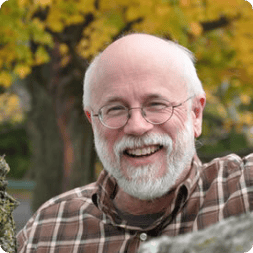 Michael J. Behe
Biochemist · Lehigh University
Author, Darwin's Black Box (1996)
Author, The Edge of Evolution (2007)
Behe coined Irreducible Complexity in 1996 - a system that cannot function if any single component is removed. It remains correct and well-evidenced. But in reviewing twelve interdependent communication systems operating simultaneously, we can be more precise. Irreducible Sophistication captures what the data actually shows: not merely that components cannot be removed, but that the system demonstrates engineering-grade architecture - specified, coordinated, multi-layered, error-corrected, and communicatively coherent. Complexity is a quantity. Sophistication is a quality. The cell doesn't just have a lot of parts. It has parts that speak to each other in compatible languages built to a unified specification. That is design vocabulary, not the vocabulary of chance.
Behe's original argument focused on individual molecular machines - the bacterial flagellum, the blood-clotting cascade, the immune system's antibody generation. Each demonstrated a system where removing any single component would cause total functional failure. The cell does not tolerate half-built machines. Evolution cannot select for a non-functional system. Therefore, these systems could not have been assembled step-by-step.
The twelve-system coherence argument extends this: the problem is not one machine but twelve communication networks that presuppose each other. The error-correction system protects a code - but that code is the very specification for the error-correction machinery. The histone code regulates the DNA - but histones are proteins encoded by DNA. Cell differentiation reads the developmental program - but that program was written into the first cell. These work as interlocking languages rather than individual machines, each of which requires the others to exist before it can function. The information problem is circular in the most literal sense. That is a sophistication problem, not a complexity problem.
VII. Answering the Common Objections
Evolution explains all of this. You're just using a God-of-the-gaps argument.
The bacterial flagellum IS explainable by evolution - Kitzmiller v. Dover proved that.
Scientists wouldn't accept this argument if it had any merit. It's not peer-reviewed.
You don't need God - self-organization and emergence explain complex systems.
But who designed the designer? This just pushes the problem back.
This is religious - you're trying to get creationism into science class.
VIII. What This Asks of You
The claim that this architecture arose without direction is not a scientific hypothesis supported by evidence. It is a philosophical commitment maintained against the evidence. The cell does not look like the output of a random process that happened to survive selection pressure. It looks like the output of an engineer who understood information theory, redundancy, error correction, regulatory hierarchies, and the communication requirements of a self-replicating organism - and built all twelve systems simultaneously, coherently, with enough forward specification to support 200 cell types, trillion-cell organisms, and the full diversity of life.
The genome is not a metaphor for a library. It is a library inside a factory inside a communications network inside a quality-control system inside an adaptive regulatory architecture. The question is not whether libraries write themselves. The question is whether any honest examination of this specific library supports that conclusion.
The following sources constitute the primary intellectual foundations for this argument. The biological coherence case is stronger when you have engaged the best opposition, not the weakest.
- Crick, F.H.C. (1958). "On Protein Synthesis." Symposia of the Society for Experimental Biology, 12, 138–163. The original sequence hypothesis: the sequence of DNA bases specifies protein sequence, and this specification is not determined by any chemical law. Crick was an atheist - which makes his formulation of the information problem more compelling. The fact that an atheist stated the core of the information problem against abiogenesis is rarely mentioned in popular debates. Search this source ↗
- Shannon, C.E. (1948). "A Mathematical Theory of Communication." Bell System Technical Journal, 27, 379–423. The foundational paper of information theory. DNA satisfies all Shannon criteria: a discrete four-symbol code whose sequences are not derivable from any rule within the symbol set. The genetic code is formally a Shannon communication system, a direct application rather than a metaphor. Read free ↗
- Meyer, S.C. (2009). Signature in the Cell. HarperOne. The most comprehensive book-length treatment of the biological information argument. Meyer surveys every proposed naturalistic mechanism - RNA World, chemical evolution, self-organization - and finds each falls short of the explanatory target. Read alongside Szostak's work for the strongest available naturalistic counter. Library ↗
- Yockey, H.P. (1992). Information Theory and Molecular Biology. Cambridge University Press. The most technically rigorous application of Shannon information theory to molecular biology by a physicist with no theological commitments. Yockey calculated the probability of a functional cytochrome c sequence arising by chance and concluded it was effectively zero. He was not a creationist. He was a physicist presenting a mathematical result. Search this source ↗
- ENCODE Project Consortium (2012). "An integrated encyclopedia of DNA elements in the human genome." Nature, 489, 57–74. Found biochemical function in at least 80% of the human genome - overturning the "junk DNA" consensus. Regulatory sequences, non-coding RNAs, chromatin organization signals constitute a functional architecture far more complex than protein-coding genes alone. The so-called "junk" turns out to be control infrastructure for the coherence systems documented in this article. Read source ↗
- Carey, N. (2012). The Epigenetics Revolution. Columbia University Press. The most accessible serious treatment of epigenetics by a molecular biologist - not written from an ID perspective, which makes it more useful for this argument. Covers histone modification, DNA methylation, non-coding RNA regulation, and heritability of epigenetic marks. Documents the additional information layers above the genome without theological motivation. Search this source ↗
- Shapiro, J.A. (2011). Evolution: A View from the 21st Century. FT Press Science. Shapiro (University of Chicago) argues that cells are "cognitive" agents capable of "natural genetic engineering" - restructuring their own genomes in response to stress. His framing does not support intelligent design, but demolishes the neo-Darwinian picture of genomes as passive repositories altered only by random mutation. The cell is an active participant in its own information architecture. Search this source ↗
- Noji, H., Yasuda, R., Yoshida, M. & Kinosita, K. Jr. (1997). "Direct observation of the rotation of F₁-ATPase." Nature 386:299–302. Masasuke Yoshida (b. 1944) and colleagues used a fluorescent actin filament to directly visualize F₁-ATPase rotating — proving it is a literal rotary molecular motor. This is not analogy or inference. The rotation was filmed. ATP synthase is the most direct experimental confirmation of sub-cellular machinery operating by mechanical rotation — the most straightforward evidence that cells contain nano-scale engineered machines. Cited by over 3,000 papers. Read at Nature (DOI) ↗
Where Does This Argument Lead You?
Select the conclusion that most honestly fits your assessment.