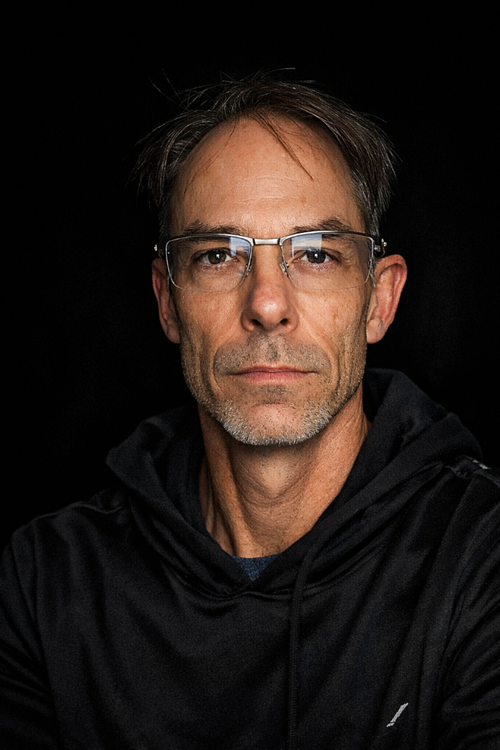
Before the arguments, before the tent, before four decades of it, there was a boy who did not want to sing, standing in front of a drama class, and a phrase written on a chalkboard that never left his mind. That is where this begins.
Origin · The First Song
The first song I ever memorized to sing was also the first and last song I sang in front of Mrs. White's drama class. I was not one to have my singing voice heard by others. But the beat was simple, the rhythm easy to follow, and the words, bleeding rivers, boiling seas, an unhelpful devil, were easy to recall and imagine. Somehow a song about a certain end seemed appropriate for a boy who felt forced onto the stage in the first place.
Run to the seas the seas are a boiling, Run to the seas the seas are a boiling... all on that day... describes not only a certain end but also the chorus of a sinner man with little to no hope.
— Daniel K. Hedrick Jr.That is the deepest layer of everything that followed. It predates the conversion, the service, and the arguments: a reluctant singer who could not shake a song about doom.

The other teacher was Mrs. Smiley. I first read the phrase in her second-grade English class, and it has officially been in my mind since that moment. She taught me to read. She also, years later in Jr. High, tripped up a bully named Sammy with a swift kick just long enough to spare me a fresh black eye. She was someone that demanded respect to the point that no one would ever think to call her just "Smiley." If there is anyone to blame for what I became, you might want to start with her.
The Competitor · Orange Crush
If singing was out, I would compete. I grew up in the American Midwest, where competition was the currency of respect. I was the smallest kid on the block, underweight and short on natural gifts, and I made up the difference with a willingness to hit and to get hit. That part came easy.

I am proud to say I was voted by coaches and players as the best defensive player of 1975. As the weak side linebacker for the Congress Park Rangers it was quite surprising for an underweight and not exceptionally gifted player to win the honor. I am certain the primary reason was that I was not afraid to hit and to get hit.
— Daniel K. Hedrick Jr.The Turn · One Step Closer
Before I ever gave the question serious thought, I spun a white Cadillac on Wolf Creek Pass in chunky Colorado snow: a failed downshift, a slow spin toward a cliff, my whole life narrowed to the rear-view mirror. I bounced off a wall of snow, recovered, and pulled over. Not a scratch on the car. An hour later I met a man named Scott for the second time that day. He was a driver too, and on his lunch breaks he read his Bible in the back of a Sedan de Ville.
I was not a true believer then, but I convinced myself someone was looking out after me. Even if I was totally irresponsible and the foolish one, I was lucky and Scott was there to tell me about it.
— Daniel K. Hedrick Jr.He gave me my first Bible. I did not read it. I carried it like a rabbit's foot with my college textbooks. It would take a few more years before it took.
April 1988. Nearly four decades ago. Mormon missionaries knocked on the door.
I was working night shifts as a Mission Planner for the Specter Gunship (the AC-130, AFSOC). A Major from the dayshift came into the SCIF during a quiet stretch and asked what I was reading. Within ten minutes I had a question I could not shake: "Is this book nothing more than a lie, and of the devil?"
The book in my hands said it was another testament of the Lord Jesus Christ. That was the problem. I had never read the first one. I was not hostile. I was honest. And honest people ask honest questions.
The Major introduced me to Lieutenant Harvey, a Black Hawk helicopter pilot. A few days of conversations followed. Real ones. The kind where politeness falls away because the stakes are too high and both men know it.
May 3rd, 1988. I gave my heart, my soul, and my mind to the will of God, the conclusion of a man who had spent his career weighing evidence, and who finally turned that same discipline on the most important question he had ever encountered.
I have been a radical evangelist ever since, almost 40 years of it. More than 15 of those years spent at street level: open-air, face to face, no stage and no safety net. Apologetics and hermeneutics became my new arena. The same instinct that made me a competitor, the refusal to accept easy answers and the hunger for what is actually true, found its deepest purpose in the defence of the faith.
That is what this site is: a case, built the same way I built every intelligence assessment, following the evidence wherever it leads even when the conclusion is inconvenient.
Street Level · The Ice-Breaker
More than fifteen of those years were spent open-air, face to face, no stage and no safety net. You need a way to break the ice with a stranger. Mine is a coin trick called the French Drop: a half dollar between thumb and fingers, a shield hand, a little sleight of hand. It looks like nothing. It buys me the one thing I actually want.

If you have another trick up your sleeve go for it, but the key for me is to explore faith in the one true God. And find it. I never ask anything from anyone except the opportunity to learn something they didn't know or do before.
— Daniel K. Hedrick Jr.The most famous man to me growing up was John Elway, probably the most famous person Colorado ever produced. I never thought I would get the chance to speak with one of the greatest quarterbacks of all time about God. Then it happened. I was not as prepared as I had always wanted to be on that day. But it proved a thing I say often: all things are possible.
Zeal has a cost, and I have paid it. I have been threatened many times and beaten a few. I will never forget the crisp brown eyes of the young Panamanian girl who had the only open seat on a bus, just after I had been mugged on the streets of Panama City.
She knew English and I tried to make her laugh, "You should have seen the other 10 guys." Even though blood was streaming down my head and back she calmly and pleasantly escorted me to Gorgas Hospital where I got 6 stitches.
— Daniel K. Hedrick Jr.I watched Ray Lewis, number 52, play his final season for the 2012 Ravens. What I admired was never only the football. It was the same one-on-one, face-to-face passion to confront people, a flying tackle of truth on many topics well beyond the field.

That instinct never left. It just changed arenas. Midwest youth sports. High school football. Ultimate disc. Bowling leagues where the margin between first and second was a single spare in the tenth frame. I have always been in a contest of some kind, and I have never been comfortable on the sideline.
 Cards
Cards
 Chess
Chess
 Football
 Downhill Skiing
 Ultimate Disc
 Bowling
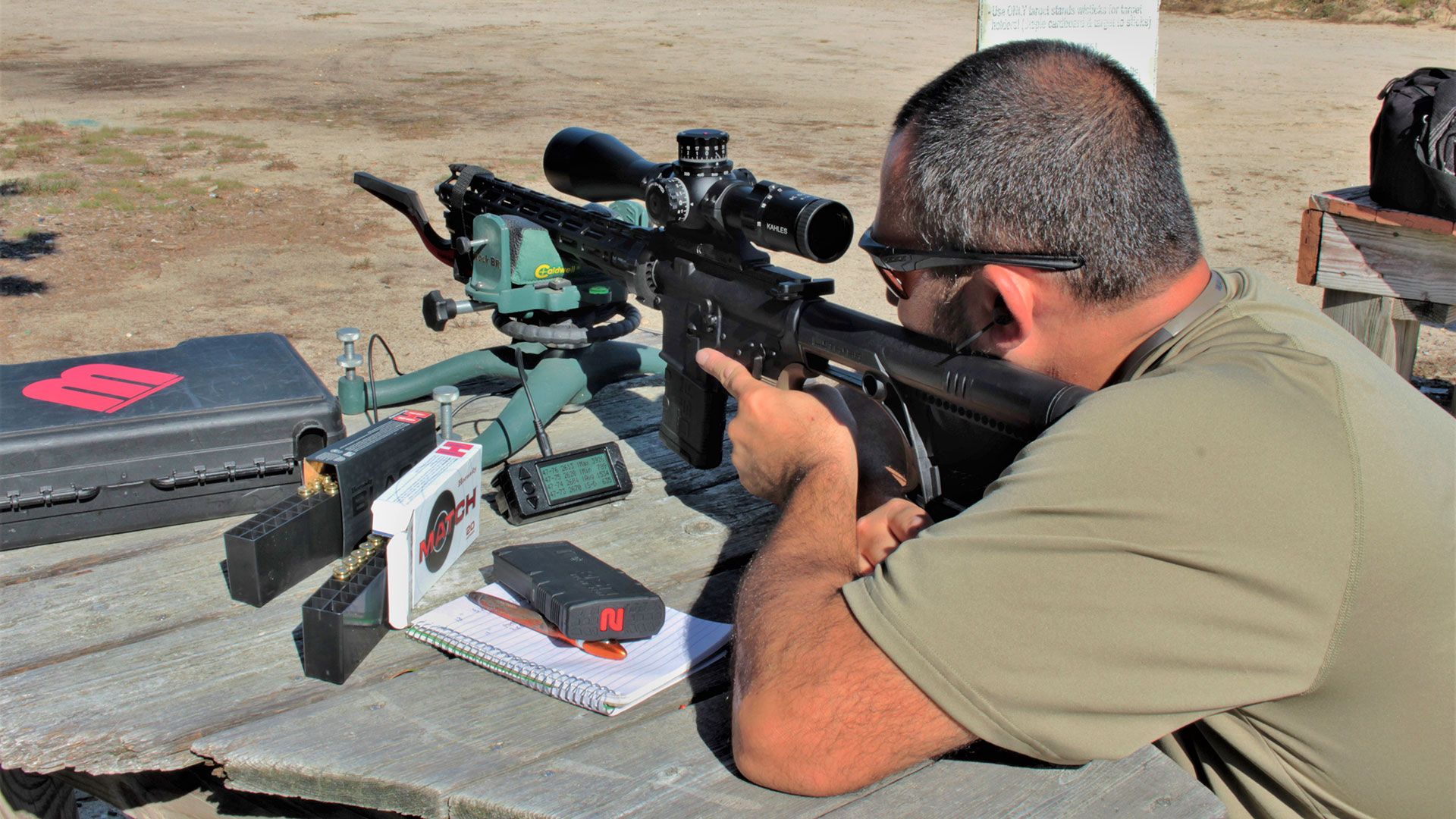 Shooting
 AC-130 · AFSOC
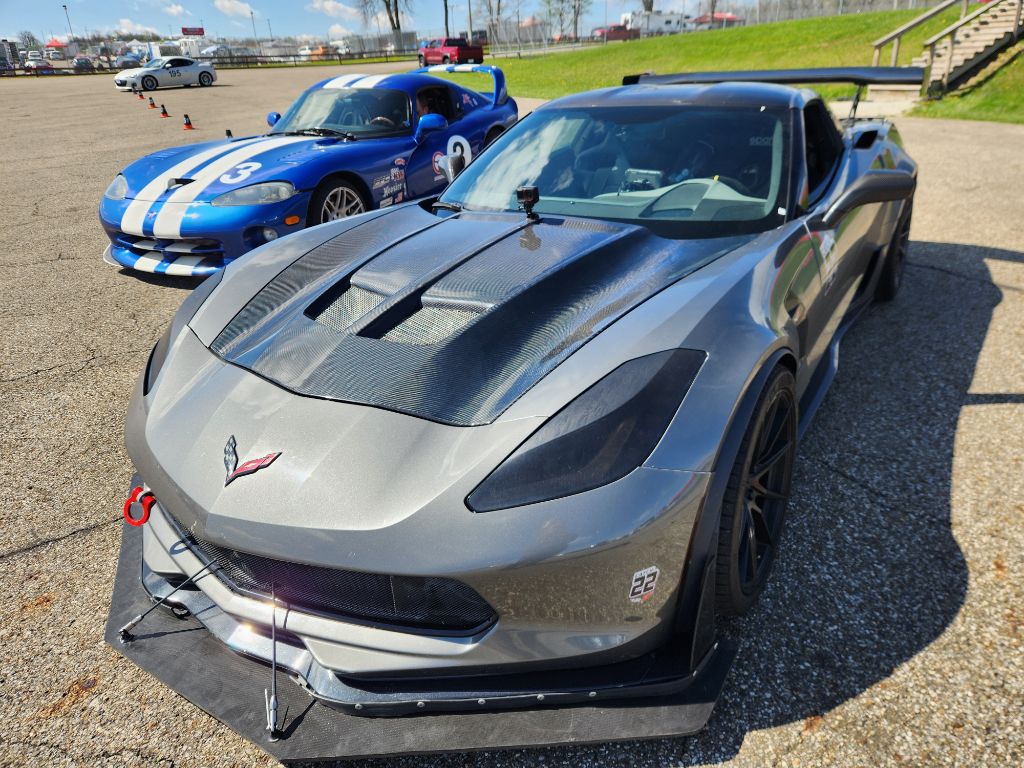 Track Racing
Two recorded lectures on camera with Bob Enyart and Fred Williams. The primary literature argument for intelligent design — made live, on the record.
Competition was always the arena where I sorted out what I actually believed about myself. Blood, sweat, and tears were not metaphors. They were the entry fee. It did not matter how many injuries came, the goal was always to rise again, to play again, to win. Many men fell over the years. Somehow I remained standing, even under some of the heaviest spiritual and physical fire I ever faced.
I am a father of five. That is why truth matters to me the way it does. Five people are going to inherit whatever world this generation's arguments produce, and I would rather they inherit a true one. That is reason enough to stay in the fight.
And I do. Right now. Not eventually. Not in retirement. Now.
My handle is HVNBND — a declaration and a question: "Heaven Bound, are you?" I have been asking that question since 1995, across thousands of conversations, in person and in print, as a genuine inquiry. Because I have looked at the evidence, really looked, and the answer I found changed everything. The only possible time to know the truth of anything, especially the truth about God, is Now.
First I ask if they know what it means. Most do not. Then I tell them: Heaven Bound. Then the conversation starts. "Wouldn't that be awfully conceited, to suggest anyone actually knows they are heaven bound? Who in their right mind could ever know that?"
I am the one who knows that — the same demand for precision I bring to the track, to the analysis, to the page. You hold the line where the data says to hold it, not where it is comfortable. The plate is an opening.
GODISNOWHERE · Origin · 2012
This site did not begin as a website. It began as a manuscript — a book titled GODISNOWHERE: An American Journey — written before the era of AI, before the era of smartphones as primary research tools, before algorithms curated what a person was allowed to find. The copyright dates are 2012 and 2017. The arguments were formed in the decade before either.
The scene at the top of this page — All on that day, the reluctant singer in Mrs. White's class — is the opening of that manuscript. It is the deepest layer of this whole project, and it predates everything else in it.
The manuscript also contains what is believed to be the only document in the Hedrick archive where the opposing argument is constructed in full — a philosophical refutation of Intelligent Design, written not to surrender the case but to stress-test it. A prosecutor who cannot argue the other side is not a prosecutor. He is a partisan. The distinction matters here.
The articles on this site represent a compressed, citation-anchored evolution of that original voice — the same convictions, the same evidence demand, but refined by a decade of public argument, radio appearances, and the discipline of writing for a skeptical reader who will not extend courtesy that is not earned. The memoir was the raw source. The site is the steel.
Jerusalem · Mt. Moriah · The Garden Tomb
I have stood at the entrance of the Garden Tomb. Not on a tour. Not as a pilgrim moving through checkboxes. I was there with Pastor Bob Enyart of Denver Bible Church while he filmed an on-location documentary examination of the Mt. Moriah site — the geographical, archaeological, and scriptural case for the place where Jesus of Nazareth was buried and from which the first witnesses reported him risen.
The tomb is a specific physical location. That is the point the sceptic and the believer must both reckon with. It is rock, cut by human hands, in a precise city, at a precise hill, identifiable and revisitable. General Charles Gordon identified the Garden Tomb site in 1867 as consistent with the Gospel description — a garden tomb near a place of public execution, outside the city wall, near a major gate. The topography has not changed.
Standing there I felt something I was not fully prepared for. The awe was not manufactured by the moment. It arrived before I asked for it. The possibility — not the certainty, the possibility — that the Lord had walked out of that specific entrance on a specific morning in the first century was not abstract. It was territorial. It occupied the ground beneath my feet.
"I stood at the entrance of that tomb in awe of the possibility that the Lord had risen from this very place — but in another very special moment that is not now, but very very near. I was moved with great emotion and Pastor Enyart encouraged me to pray over those that joined us at the Garden Tomb." — Daniel K. Hedrick
I prayed. Out loud. For the people standing with us. The conviction that drives every argument on this site — every article, every piece of evidence assembled over three decades — was not born in a library. It was confirmed at a tomb entrance in Jerusalem. The argument from history and the argument from experience arrived at the same address.
The full case — the minimal facts, the empty tomb, the 500 witnesses, the transformation of the disciples, the conversion of Paul and of James — is laid out in The Historical Case for the Resurrection. If you want to know why I was standing at that tomb, that is where the evidence begins.
- Full access to all NO and NOW arguments
- New article pair unlocked every 7 days
- Email notification on each unlock
- Reader poll participation and results
- No credit card — ever
Free · Email required
◈ Become a Champion What you gain- Every article — all tracks, all access, immediately
- Deep Research archive (primary sources, bibliography)
- All mosaic companion pages
- Champion-only content as it ships
- Direct line to Daniel K. Hedrick
$99 / year · Cancel anytime
AI & CONTENT DEVELOPMENT
The arguments on this site are mine. The research, the conclusions, the framing - those came from thirty years of reading, questioning, and refusing to settle for easy answers. AI tools were used in the development of this site to help organize, format, and present that thinking clearly. Every claim has a source. Every source was chosen by a human. The AI did not argue. I did.